The Most Overlooked Business Asset of 2025 (I Regret Ignoring It) — Silicon Valley Girl Podcast
Entrepreneur, content creator, and founder based in Silicon Valley. Marina interviews the world's top tech leaders, investors, and innovators to uncover the trends, strategies, and mindsets shaping the future. With millions of followers across platforms, she brings a unique perspective on technology, business, and personal growth.
Marina Mogilko: I've recently met someone whose emails get around 1 million impressions per month and he's making hundreds of thousands of dollars selling ads in those emails. And I've been working with emails since 2012. And today I decided to share all the strategies that have been working for me. We're building a new email list right now from my Silk Girl subscribers, from you guys, because email is an asset. It's the only way I can connect with you without relying on the algorithm. I want to help you build an email marketing system that consistently brings income. I run multiple businesses. We have tens of thousands of emails that we collected and every business relies on email. Today, email accounts for 21% of revenue in our school. We have the school for creators and people who want to build content with AI and 27% at Lingua, my company that helps people learn languages and prepare for language tests. In both companies, email outperforms both targeted advertising and YouTube in terms of effectiveness. Now, let me show you how to set up email marketing from scratch and turn it into one of your main revenue channels.
For examples and step-by-step instructions, I'll be showcasing Omniscent. It combines powerful automation capabilities, advanced segmentation, and AI tools from subject line generators to personalized product and content recommendations. And yes, Omniscent is the sponsor of this video. In this video, we'll talk about collecting your initial subscribers, creating a welcome sequence, nurturing your audience, launching sales, and scaling the process. And of course, I'll share examples that work for our own email campaigns, and I'll share some stats. We're also going to research some case studies from other entrepreneurs who use email and AI to grow their businesses.
First things first, where do I get subscribers? The first step towards, say, $10,000 a month through email is building a high quality subscriber base. It's important not just to chase numbers, but to collect people who are genuinely engaged and ready to interact with your brand. Because what's the point of sending an email when nobody reads it or if they read it, they don't understand why they're reading it, so it goes directly to spam. It messes all of your statistics. But something that's called a personal email list is where you get the most engaged subscribers. I feel like every business owner has to have a personal email list as well because that's another sales funnel for their business. We want to buy from people. I only started actively building my own subscriber base this year. I still regret not starting this email list sooner because it's the only channel where I truly own my audience. At the same time, our Russian speaking list has been around for over 12 years and has consistently generated revenue for the English speaking audience who have built a simple but effective process.
So I have Sophia on my team. She's our company's LinkedIn manager. She also does X and email newsletters and she prepares and sends the email. Of course, we discuss the topic together. I give her information. She just makes sure it looks good. On the day it goes out, she posted in our Instagram team chat that the email with a subject line xxx has just been sent. Cenia, my company specialist for Instagram and Tik Tok, as well as editing short form videos, creates an Instagram story teasing the topic of the email and ends it with a call to action to subscribe to our newsletter. This way, we're consistently growing my email list with Instagram, turning social media traffic into a long-term asset. For now, Instagram has actually been our largest source by volume. In the last 30 days, we gained almost 400 subscribers, and their open rate is amazing. It's 56%.
Of course, we also advertise our email on YouTube and LinkedIn, and it's amazing how people who subscribe from YouTube actually have 87% open rate. LinkedIn is the fastest way to grow right now, but also they have their own newsletter feature that's built in LinkedIn. We keep these newsletters separate. So my own newsletter, I focus on AI tools that we're building, what's going on my business life. With LinkedIn, we almost always rely on my podcast. We summarize the podcast in a LinkedIn newsletter, but every newsletter also has a call to action to subscribe to our main email list. And this is a way to grow your email list organically.
I also wanted to highlight some examples that I've seen from other creators. Everyone is competing to get more subscribers on their email list. And it's no longer enough to just offer something simple like my top 10 prompts for ChatGPT. John has this YouTube thumbnail hack pack which has 100 viral thumbnails, three ready-to-use templates, and a thumbnail tester tool. And he gives it all away for free in exchange for an email. It just perfectly illustrates the lead magnet philosophy: offer proven value and get a subscriber's contact in return. There is a guy called Rowan Chang, the one who built The Rundown AI, the whole company that generates hundreds of thousands of dollars in ad revenue. His newsletter is one of the most read in the world and he delivers key AI insights in just 5 minutes a day. He's highly active on X and other platforms using viral posts and educational content to funnel a high-quality audience into his email list.
And if you're thinking, "Oh, but Marina, you have audience. John has audience." Rowan didn't really have a personal brand before he started an AI newsletter. What he did, as he told me, they were just posting viral posts on X about AI asking people to subscribe to their email. So yes, you will still need to hack content to build your subscriber base, but it doesn't mean you have to have an audience in order to grow a subscriber list.
Another thing that's really helpful is lookalike audiences. Finding highly similar and potentially interested users based on existing list data. If you work with Omniscent, you can do this by using their built-in tools. Another thing that we do constantly with our emails, we're testing offers and formats all the time. For example, we always run A/B subject line tests. Look at these two. I pay my financial adviser 1% of my portfolio every year, so you don't have to. That was a winner. And another one, here's my portfolio. Feel free to copy it. Which got 13% open rate. And the first one got 16% open rate. It's all showing that even a small change in wording can significantly impact your subscriber interest. So always be testing.
Another thing we did, which is cool, we did this draft email experiment. We intentionally crafted an email to look like an accidentally sent draft, an incomplete subject line, unfinished structure, make it look like an overall mistake. This approach triggered curiosity and prompted subscribers to open the email. The result was 42% open rate. Of course, you don't do this all the time, but it's cool. We talked about getting the subscriber base and playing with open rates, but you also want to make sure that it's a habit for all of your subscribers to open your emails.
So once you get your subscribers, there is another task. You need to automatically segment your subscribers by interest at the signup stage and personalize future campaigns for them, ideally using AI. When set up correctly, subscriber to customer conversion rates can reach 17 to 28% depending on the segment. It just proves that list quality is always more important than size.
A very important part of nurturing your subscriber is a welcome email sequence. When someone leaves their email, it's important to act fast. Those first emails build trust and often determine whether the subscriber will stay with you long term because otherwise they forget. Ideally, you set up a fully automated 5 to 7 email welcome sequence and you can do this automatically with Omnisend. The goal of this sequence is to introduce the subscriber to the brand, deliver real value, and guide them toward their first desired action, a purchase or a product registration.
Here are some of the examples of subject lines that we're using. Day zero, eight money habits that made me a millionaire and how to start today. Day one, six AI prompts that changed how I work forever. Actual prompts we use daily. Day two, the founder's playbook, 18 game-changing stories to inspire your next move. Day four, boost your productivity with AI live from Google I/O. What I saw will blow your mind. Day six, why now is the best time to be a developer. This sequence has logical progression, value, authority, offer. Each email provides specific actionable content and builds habit of opening future newsletters. Because it's my personal email, it also leverages my personal experience, insights, fresh trends to maintain attention and trust.
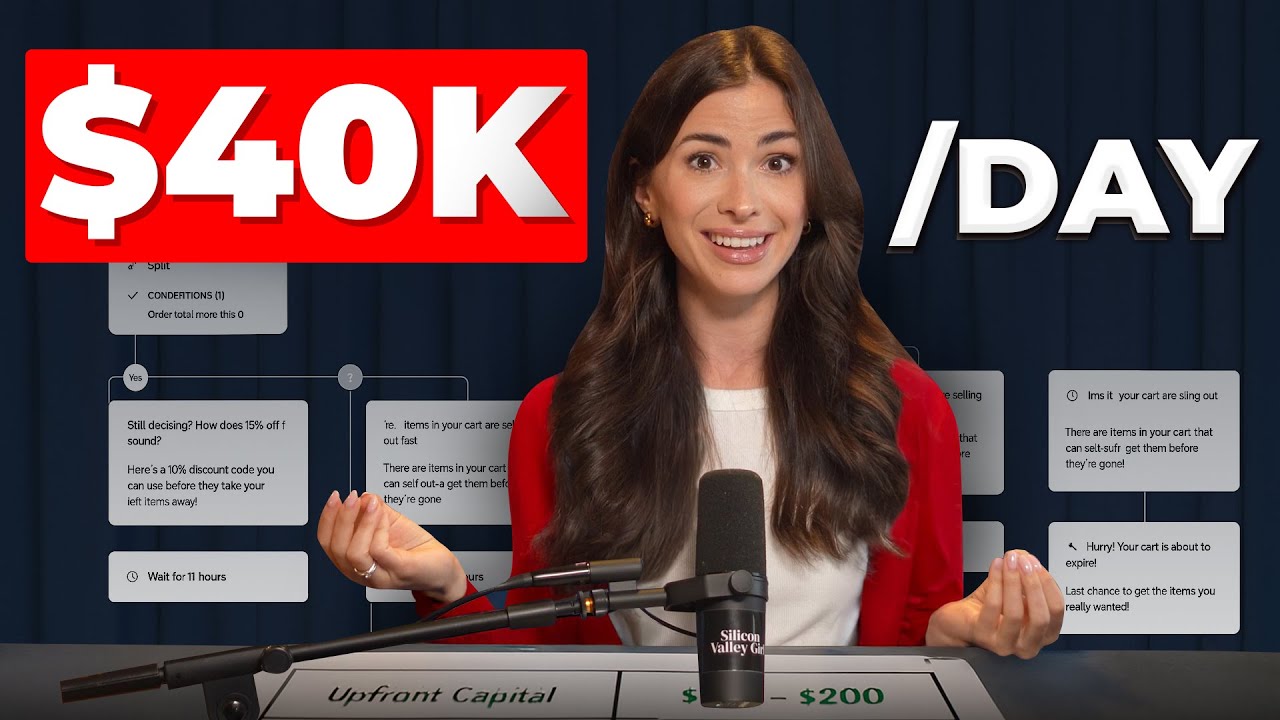
Here's how you can automate the entire sequence. You use AI subject line generator. It tests multiple subject lines for you and selects the best performer. Then you do dynamic content personalization. It tailors email content to the subscriber's interests and behaviors. Then you do trigger-based automation. It sends each email based on subscription dates and user actions. Your trigger action could be either purchase or maybe you want them to listen to your podcast. Omniscent can actually track all of that. If they haven't completed a purchase, they will send them another email like, "Hey, I saw you added this to the cart." Or, "I saw you clicked on this YouTube video. How are you liking my channel?" According to Omnisend, welcome sequences can generate up to 67% more sales compared to one-off campaigns.
After the welcome sequence, the subscriber has already received initial value and is familiar with the products. Now, the goal of the next stage is to keep their attention, build trust, and gradually move them toward making a purchase.
Marina Mogilko: Your whole goal, let me demonstrate how you can do this. Your nurture sequence can be three to five emails with engaging content starting one or two days after the welcome sequence ends. And if you're building a business with multiple products, it's really important to segment people. For example, at Lingua Trip, we have a segment for TOEFL takers. We have a segment for people who are trying to work on their accent. We have a segment for people who are trying to enter a US university. We have a segment for people who are trying to achieve an advanced level of English. And this is where it makes it a little bit more complicated because we try to nurture every segment for their own particular topic. But for my personal email, we don't have too many followers right now. And I feel like I want to build just a group of people who like me in general and like things that I'm excited about. So we don't have any segments for my personal emails. But again, for any business, I'd recommend at least three segments. People who subscribed, people who already bought something, and people who are just about to buy. Maybe they added something to their cart but never completed a purchase. And because you're going to be building emails for each segment, you can include different call to actions and this can be done automatically with an omniscient. Of course, you choose different topics and track their performance. And of course, after the nurturing stage comes the key phase, sales. Again, if you're building this email for a business, you don't have to be selling right now. Maybe you're just growing, but at some stage, you will be selling. If it's a personal email newsletter, you will be selling some other people's products. You might be selling ads to other companies, or you might be selling your own product. When you start selling, it's important to not only offer the product, but to do it in a highly targeted way using segmentation, testing, and personalization. Let me give you an example of how we sold to our audience this summer.
Marina Mogilko: So, I hosted a webinar about best AI practices from my team to build content. It was a webinar in Russian. So, we used our Russian email list 46,000 subscribers. We generated around 40,000 on the first launch and around 30,000 on the second launch. We did two launches and there are certain techniques that we used. So we primarily sold through emails and here's what we did. Of course we sent an email saying we have this webinar but then we also applied a campaign booster. It's a tool that automatically resends emails to non-openers with a refreshed subject line because people might just miss your email and instead of just rewriting the whole thing, you can just send it to those who haven't clicked it. This is a genius tool that helps you increase sales. Here are some best performing emails in terms of sales. When we announced that the workshop becomes unavailable tomorrow it boosted sales because it creates the scarcity mindset. How we delegate boring work to AI and we focus on creativity. How not to lose your job because of AI. How to do in three hours what used to take eight. AI is not a thread but it's your superpower. Those emails showed around 17% conversion rate. Here are some other titles to inspire you. How not to lose your job in the AI era. 40 plus AI tools waiting for you right there. YouTube has become Hollywood and creators are now directors. AI your friend or foe. This sequence resulted in 129 sales with 27% conversion rate which is pretty cool. And what we realized is that you need to launch your product multiple times because the first time your true fans are buying. The second time you know what was working. You have the results. Your audience knows that you were talking about this product and if you're launching it again, they get a feel that it's actually a good product because you've seen some good results with the first launch. So again, key takeaways, launch your product multiple times and then personalize emails because people who've interacted with your product before and didn't buy are more likely to buy on the second launch and experiment with sending new titles to non-openers. Once you go through these things, of course, a lot of the things that I mentioned you can automate. You can automate abandoned carts. You can automate post-purchase follow-ups. For example, you can send an automatic email after a purchase like a confirmation or a thank you or an upsell. Then you can come up with re-engagement series. Those are emails for sleeping subscribers who haven't opened the newsletter for a long time. There is an AI tool for content personalization, subject line, body copy, offers that are adapted for different segments. I used to write all of this manually before. And once you set everything up, you just need to sit back and start analyzing. Test different subject lines. See where people are most likely to click. Track the winning subject lines and see how you can adjust them for other emails that you're sending. Use winning copy for Instagram posts, LinkedIn posts. Compare effectiveness. What works better for your audience, short emails or long emails? Graphics or text-based content? Determine which segment is the most active and generates most revenue. Maybe this is where you have to double down on creating more products. This is how we get insights on what to launch next and constantly be experimenting. I feel like with emails, it's like you're building this asset. You're nurturing it and it really becomes your asset. You can always copy your emails and go to another platform. And we're still reading our emails. I feel like this is something that gives me stability as a creator. So, start building your email list now. Start experimenting with things. And if you want to build a system like the one we've talked about, start with Omnisend, a platform where you can run all your automations and AI personalization in one place. And if you're already using another platform but thinking about switching, the good news is Omnisend makes migration smooth and painless with your entire database carried over without headaches. Check out the link in the description. And don't forget to use code SVGirl30 to get 30% off your first three months. Sign up, try the approaches we discussed, and share your first results. And let me know how it goes. Thank you so much for watching this and I'll see you very soon on this channel. Bye.