Former Financial Advisor: “Do Not Buy A House!” Do THIS Instead! @humphrey — Silicon Valley Girl Podcast
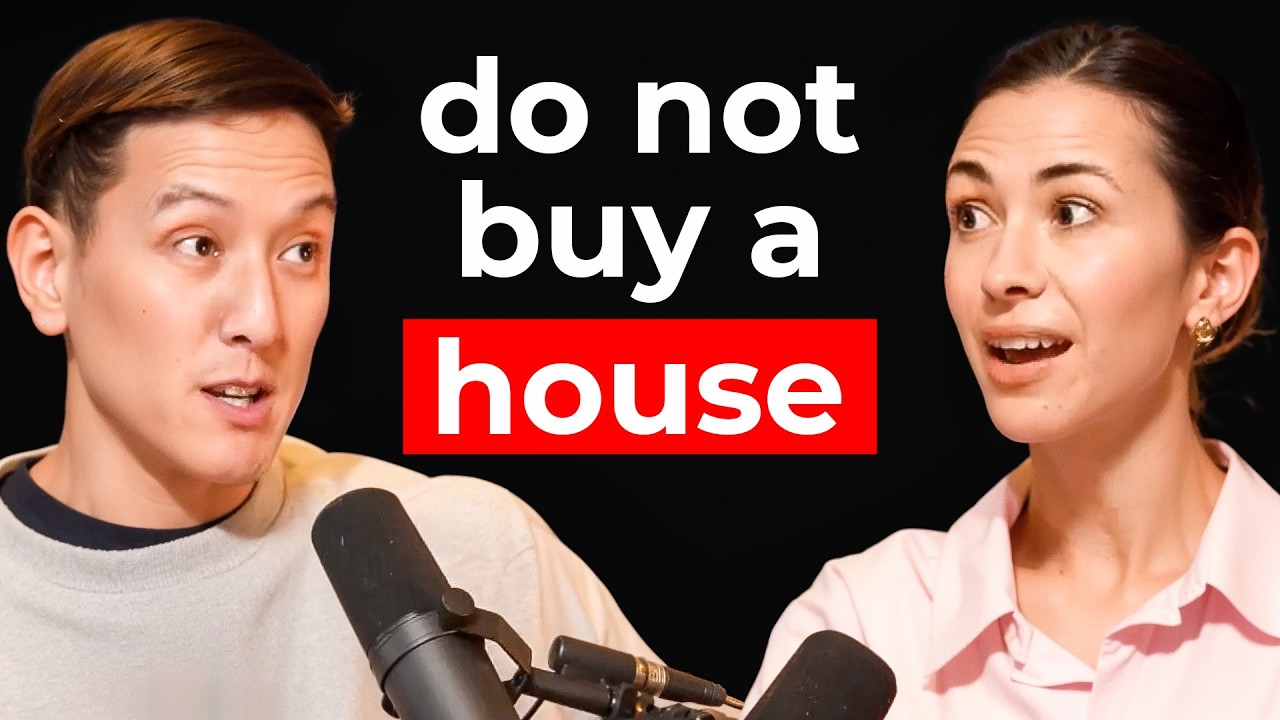
Humphrey Yang is a former licensed financial advisor turned personal finance content creator, known for making complex financial topics accessible to everyday investors. He runs a popular YouTube channel with weekly financial videos covering investing, budgeting, crypto, and wealth-building strategies. His approachable style and data-driven advice have built him a large following among millennials and Gen Z investors.
Marina Mogilko: What I'm going to tell you right now is going to be very different from what are the worst decisions people can make with their money in 2025? Right now I don't have that cash, it's all fully in the market. How do you stay sane when the market goes down?
Humphrey Yang: Ideally I just keep all that money in the investing portfolio forever.
Marina Mogilko: Let's talk about crypto. Oh, I have a 5x, I want a 10x. How complex everything is. People saying you should sell everything, and you do the same for your meme coin strategy, right? Not financial advice.
Humphrey Yang: Yeah, exactly. Everything's falling.
Marina Mogilko: Let's talk about that. Can we start with like a general budgeting strategy for people in 2025? How much you save, how much you invest?
Humphrey Yang: I'd like to say for most people that they should try to aim to save 20% of their income if they can. If they can do more, that's great, but most people—I think the average personal savings rate in the United States is about 4%—so if you can get up to 10, 15, 20%, that gives you a lot more flexibility and that will help you save and invest more in the long run.
Marina Mogilko: When you say save, like okay, I'm putting aside 10%, does it stay as cash or does it go into high yield savings account? What would be the strategy there?
Humphrey Yang: Yeah, I would stockpile some cash until you have at least three to six months of an emergency fund saved up. So if your monthly expenses are $2,000 a month—that's what you need to live—you should at least save $6,000 or up to $12,000, put that away, put that aside in a high yield account. You don't touch that money; that's just for emergencies. And then anything else you make on top of that and you can save, then you should invest that. That's the general guideline.
Marina Mogilko: Yeah. What should be the investment strategy for someone who's just starting out?
Humphrey Yang: Investment strategy super depends on the person's risk tolerance and their time horizon. So if they need the money next year, I probably wouldn't say you should invest. Because let's say you need money for a wedding, right? And you know you're going to spend money on the wedding. If you invest that money and it goes down in value, you would probably feel pretty bad about it, and if you can't afford your wedding when you want to afford your wedding, that's not going to be good.
Let's say your time horizon is 40 years, so you want that money to be your retirement money. Then in that case, invest all you want and you don't have to worry too much about it. Kind of put it into the market and forget about it.
For most people, I'm going to get to what you should invest in now. For most people, I think ETFs are pretty solid. Those are just exchange-traded funds. That just means you're buying one fund, and within that one fund, it encompasses let's say 500 other stocks within that fund. So by buying that one fund, you are buying literally 500 stocks all at once.
Marina Mogilko: Do you just buy that fund or is there a split? Like it has to be like 20% international? An ETF that tracks Bitcoin, right? We just—what would the strategy be there? Let's talk about longterm, like 10 years.
Humphrey Yang: So there are a lot of ETFs. You don't just buy a random ETF. You typically want to buy an S&P 500 ETF—that's the US stock market. You could balance it out with international ETFs. The rest of the world has an ETF called, I think, "all world minus US," so basically it's like every other stock in the world besides the United States. So you could do that, and then you could also balance with bonds.
Investing and diversifying your portfolio should always be part of your life, regardless of how much money you have, because you're laying this foundation. A typical percentage—let's say you wanted a three-fund portfolio, which is a very famous portfolio. A lot of people online like the three-fund portfolio because it's very well balanced. It does well in times of prosperity but doesn't have as much downside risk. The typical split on a three-fund portfolio is something like 50% in US stocks, 25 to 30% in international stocks, and then the rest would be bonds.
But sometimes bonds for a younger investor is not risky enough, so that's something you kind of have to balance with yourself. Like if you're a riskier type of investor, you might do more in US stocks. US stocks probably have the greatest potential for upside, but they could also go down too. Same thing with international stocks.
Marina Mogilko: Yeah. And where does crypto, real estate, everything else fall into? Like how do you decide about those things? And like even individual stocks, because Nvidia, yeah, I know that's like one of the best investments ever.
Humphrey Yang: Yeah, so I think there's this—we'll talk about how to build wealth because what I just kind of laid out for you in terms of the three-fund portfolio is a very safe way to compound your wealth. But if you want to build wealth fast, typically you need to take a little more risk. And the more risk could involve individual stocks, it could involve you getting into real estate, it could be that you buy some crypto.
But for the general person who doesn't really want to spend too much time investing, the portfolio I laid out earlier is perfect. You might want to add 5% in alternatives like crypto or real estate. You could do that. But then, like, because I'm thinking about myself—like what number do you reach when you start thinking about something alternative? Like okay, let's say I don't know, 100K invested in the stock market. Is that the time to think about other things?
Marina Mogilko: Yeah, that's a tough question. I think you can always think about it, but higher numbers are better for thinking about other things. Because the way capital works, if you get 10% on 100K, that's a lot more significant than 10% on $100. So as your portfolio balance grows, you can maybe set aside a portion of your portfolio to take higher concentrated risk so that you could try to make more money. But you never start with it, right?
Humphrey Yang: You start with—yeah, ideally you start with something. Ideally you want to get your base up to at least $100,000, and then from there maybe you take small concentrated bets on things that you believe in. I think the danger of taking big swings when your portfolio isn't $100,000 already is that you could go to zero again, or it could be really demoralizing.
Let's say you get your portfolio up to $50,000 and you spend half of it and you put it into an individual stock that goes down 80%. Then you're kind of right back where you started, maybe you lost a few years of progress, and that can be really frustrating. So instead what I like to see people do is get that momentum and keep that momentum going. Just invest.
Marina Mogilko: How often do you check your balance and how do you do regular investing? What would be your advice? Is it like manually or you can automate it?
Humphrey Yang: You can automate it. So you can do something in your brokerage account or even your Roth IRA or IRA or 401K where you contribute a certain amount every interval. So typically every two weeks is good, every month is good too. But that's called dollar cost averaging. You just want to always buy into the market.
Marina Mogilko: Typically, people ask is there a good day? I know for crypto weekends are good, right?
Humphrey Yang: I don't think there's ever such thing as a good day. I think it doesn't really matter as long as you're consistently investing. I think that that's more important.
Marina Mogilko: Does it buy into like, so you on your account tell it like every second Monday of the month you buy this and that? And every brokerage can do that?
Humphrey Yang: Most brokerages have that feature. Yeah, it's just called recurring investment.
Marina Mogilko: Can you recommend maybe two or three brokerage apps?
Humphrey Yang: Yeah, my favorite brokerages are probably Fidelity—that's like the biggest, one of the most well-capitalized brokerages in the United States. Another one I think that's very beginner-friendly that got a lot of hate in 2021 was Robinhood, but they've made a lot of improvements since. You just have to kind of be careful. It's a little more gamified.
Marina Mogilko: Do they have automated investing?
Humphrey Yang: They do have automated investing. Yeah, you can automate it. And then some other ones like Schwab is fine. M1 Finance is good too. In general, the bigger the brokerage, usually the better.
Marina Mogilko: So you mentioned those different accounts—you mentioned like brokerage, like general investment, 401K, Roth IRA. So if a person just starts investing and they're aiming for like 10 years, would you start at 401K or would you just put it in a brokerage account? Because with 401K you can only start taking out money when you're like 70 something, right?
Humphrey Yang: Yeah, I believe it's 401K—sorry, I get a lot of the accounts confused sometimes—but I'm pretty sure with 401K you can start to take contributions out, or sorry, your earnings out, at 59 and a half. But then they start requiring you to take money out around the age of 70 and a half. I think that's required minimum distribution.
Marina Mogilko: Because when we started 401K, we started only two years ago. Because when I was talking to my husband, he's like, "Why would we just leave money there? And like, we are 34, 33. We're so active. Why don't we invest in business? Why would you invest in 401K?" And I have my financial adviser who was like, "Marina, you don't understand compound interest without tax. That's a win for your business." So he's kind of making us contribute every year. But for me, psychology again—I come from a country where we had so many turmoils where our savings just disappeared. So what would be your general advice? Like, do you start with a general brokerage account or you go straight into tax-saving strategies?
Humphrey Yang: Yeah, that's a great question. I believe with your audience, which probably a lot of them are non-US-based, is my guess. You're going to have a lot of skepticism when it comes to the 401K. That makes total sense. And sometimes it's better to take control of your own destiny and just like take that money and go buy a house with it or buy a rental property with it, and you can tangibly see the money there. I get that too.
The reason why the 401K in America is so good is that it's a forced savings mechanism. So it forces people to save that normally wouldn't save. If you're already a great saver—like, let's say you save 50% of your income—and you are a better active investor or you feel like you can do some business with it, maybe you do that instead.
If you need the money in 10 years, like what you just said, then you probably wouldn't invest it in a 401K because you got to take that money out eventually. And if you put it in a 401K, you're not going to be able to take that money out. Well, you can borrow against a 401K.
Marina Mogilko: Yeah, you can borrow against it. There's some strategies.
Humphrey Yang: Yeah, but I would say in general, most people, if they need the money before they retire, brokerage is fine. Yeah, you're going to be taxed on it, but that's better than let's say paying penalties because you're withdrawing from your 401K. Because the balance is crazy—like 10% or—
Marina Mogilko: Yeah, plus tax. I feel like a lot of people who are watching, they also just moved to the US and they're like starting to realize how complex everything is. Very complex.
Humphrey Yang: Now the 401K is worth it if your employer gives you the match. Yeah, because that's just free money. And also if you have your own business, because that's an advantage. And what I realized, what my CPA told me once: if you're getting a 401K distribution, it goes onto your W2, so if you're applying for a mortgage, that increases your W2 income. So it's good for mortgage.
Marina Mogilko: Good. That was another key takeaway. Yeah, that's great.
Humphrey Yang: Yeah, that's awesome.
Marina Mogilko: Cool, okay, so we talked about saving, etc. Um, what about real estate? What about like, do you rent or do you buy? I currently rent.
Humphrey Yang: Yeah, yeah. But in San Francisco, it's a lot cheaper to rent than to buy.
Marina Mogilko: So I live in San Francisco. The city is there a general rule? So you said in San Francisco it's cheaper to rent, like how do you calculate that?
Humphrey Yang: Well, I look at how much I pay in rent and I look at the comparable amount that I would pay in mortgage and what type of house that would afford me. And for the same amount of rent, I would not be able to afford anything nice. It's just like I get maybe like a one-bedroom condo, and I live currently in a two-bedroom, two-bathroom.
Marina Mogilko: So you're not following the rule where you live under your means?
Humphrey Yang: No, I'm definitely living under my means for sure.
Marina Mogilko: Yeah, but not too low.
Humphrey Yang: But not too low, yeah, yeah. I mean, I still need space for like my studio and I realized I just kind of like a nicer place to live, so yeah.
Marina Mogilko: But don't you have FOMO of like missing out on property rising here? I do. They double every 10 years, right? Here in the bay?
Humphrey Yang: Yeah, mostly. Not San Francisco condo market—that's kind of stayed flat. That's crazy. The market stayed flat. The prices are so high and nobody—yeah, because you can't really rent it out. If I can afford something down here and pay, you know, put a good down payment on it, I would probably do that.
Marina Mogilko: So down here would be the peninsula?
Humphrey Yang: Yeah, uh, because real estate tends to appreciate quite well down here. Yeah, and what I realized, a lot of people who bought here, they pay twice as much in mortgage versus what we pay in rent. But they have this upside when the property just, you know, gains a couple million.
Marina Mogilko: Yeah, especially in the Bay Area where that's very, very common. I would say across the country, there are some cities where real estate hasn't appreciated in the last 10 years. And so that's what you kind of have to consider: like, where do you live? How does the appreciation look historically?
Humphrey Yang: Yeah, if it looks good historically, how might be a good idea. Might be a good idea. Yeah, yeah. Is it an indicator that it's probably going to continue growing?
Marina Mogilko: Um, I mean, in the finance world you always say, "Yeah, because performance is not a predictor of future results." But I mean, because I'm always worried, like Hawaii, right? It's gone so crazy in the past 10 years. Going to continue on?
Humphrey Yang: Yeah, I think those are those tough questions, and those kind of come down to more personal yeah beliefs and decisions with their money.
Marina Mogilko: Yeah. With have you ever considered buying real estate?
Humphrey Yang: Yeah, yeah, definitely. Have you bought anything, or what's your plan here?
Marina Mogilko: No, I want to buy something probably the next year or two, so yeah, I'm still planning to. But mortgage rates right now are quite high, so yeah, waiting. Are you going to buy something to live in or you going to rent it out?
Humphrey Yang: I would buy something to live in personally. Yeah, I think I thought about renting things out, but I don't really want to be someone's landlord. I think that's what I've realized.
Marina Mogilko: Why not Airbnb? Like all the depreciation things. I think I feel like you could make way more money. Focus on the stock market, or yeah, or just focusing on my main business.
Humphrey Yang: Yeah, oh, interesting. Yeah, but you can have someone manage it, I guess.
Marina Mogilko: I could, yeah. Okay, okay. Let's talk. I know you have an Airbnb though, so I'm just trying to understand like other people's strategies. And I totally see how Airbnb didn't really do anything in terms of like income this year. It's just lost money, and you know, it generated good revenue, but it still went to like covering the mortgage, etc. Did you spend a lot of time on it?
Humphrey Yang: No. Okay, that's well, I spent some time. I went there filming, and like we bought the furniture and we decided we had to change the air conditioner and we had to do the listing, the photos, like everything. But that was cool experience for me.
Marina Mogilko: Okay, as long as you enjoyed it. Yeah, for sure. Yeah, yeah. Um, but not as much as compared to like my main business, right?
Humphrey Yang: Um, let's talk about crypto.
Marina Mogilko: Let's do it. I like crypto. I am so like, this year I like, should I buy meme coins? Maybe you should. You. What do you think? Like, what would be the advice here?
Humphrey Yang: Okay, my crypto advice from what I'm going to tell you right now is going to be very different from my YouTube channel. On my YouTube channel, my audience hates crypto. I've already tried to talk about Bitcoin or try to talk about Ethereum. People are very anti-Bitcoin, Ethereum on the channel, and so I just tend to shy away from it on the channel.
I think my personal opinion is that crypto is one of the best ways to kind of level out wealth in a way. It's almost like a meritocracy. So if you're able to identify really great coins and get in them early, that's like people actually do make a lot of money with that. However, for every one person that makes let's say a 20x or a 50x on a crypto coin, you have 99 people losing all their money. And I think that is incredibly difficult. That's the incredibly difficult part about crypto.
And with crypto, your greed gets unimaginably high. You get so greedy because you're like, "Oh, I have a 5x, I want a 10x." And then that's hard to manage emotionally. And if you're in a lot of crypto, you have to watch it all day because it's 24/7. It never stops. So there are a lot of mental issues—not mental issues, I want to say—but it takes a toll on your mind if you're investing in crypto.
However, I have seen people turn a small amount of money into a large amount of money just by buying the right crypto coin. But even knowing the right crypto coin, retiring at 20-something—exactly.
Marina Mogilko: So how do you have you tried picking meme coins to invest in?
Humphrey Yang: Yes, I have. How was it? Some are great, some are bad. How? I've I'm up.
Marina Mogilko: Yeah, and this year you're doing it now?
Humphrey Yang: Yeah, yeah. So how do you find them? Through friends, chats typically. Through friends, chats, yeah. I would say you have to be kind of plugged into a crypto community of some sort. You can do that by buying like, let's say you have the most expensive NFT, right? Like back in 2021 it was like a Bored Ape. Right, they might have like a little insider group on Discord where you can kind of trade ideas with each other.
Um, the longer you're in the crypto space, the more you get to know the people in crypto. Sometimes there's crypto Twitter, so you get to know some of the influencers. Maybe if you know some of the influencers, that's great. If you work in crypto, right. So it's mostly insider information?
Marina Mogilko: Yeah, I think there is some inside information, but there's also just like keeping a pulse of what's going on in the crypto markets. And you can even make money not being an insider. But you have to keep a pulse on what's going on all the time, and you have to be able to move fast, and you have to be very objective and not get too emotionally tied into it. That's what's very hard because even if you're right, if you're too emotionally invested and let's say you stay in the coin for too long, you could lose all your gains.
Humphrey Yang: So you track every single day what's going on, and if you see it going down, you just sell or something like that?
Marina Mogilko: I mean, I only—I'm only in like four coins right now, but I used to be in like 10 to 20. It's hard to track everything, but if you're just in four, then you just check every, you know, you just check the four.
Humphrey Yang: What is the platform that you're using for or is it a different platform for every?
Marina Mogilko: I have Coinbase, and then I have a Solana wallet on Phantom, and then I have a MetaMask wallet from my Ethereum transactions.
Humphrey Yang: Okay, so those are decentralized. Your coins, yeah. I have MetaMask. I have Coinbase. But I remember when I was trying to play with meme coins in 2021, I had to get on so many exchanges because they're all so different. Different platforms, you know, they only launched on this exchange, and you're like, "Oh, I need to transfer money there and convert it into some weird coin to buy another weird coin."
Marina Mogilko: These days it's a lot easier. Mostly it's just on like either you're either on the Solana chain or you're on let's say Ethereum or Base, which is Coinbase.
Humphrey Yang: So Phantom for Solana, Coinbase, yes. Not financial advice, but you know, if you're trying to get into it, that's what you would do. But it's very hard. I would say if you're completely new to crypto, you probably won't make money. You kind of have to have a good network of people that you already know. You kind of have to get into it a little bit, or maybe you buy into a community or something like that.
Marina Mogilko: Okay, let's do a simple strategy then. Let's do Bitcoin. What would be your recommended percentage of the portfolio that goes into Bitcoin of crypto?
Humphrey Yang: Yeah, no, uh, in general—oh, um, if you believe in crypto for the long term, which Bitcoin is the best asset of all those, I'd probably put 3 to 5% of your portfolio in Bitcoin. Remember how it was 1 to 2%?
Marina Mogilko: It was, yeah, like three, four years ago. I'd ask everyone. They'd be like, "1 to 2%." Now I think BlackRock raised it from like 2% to 4% in their portfolio. And like suddenly my financial adviser is like, "Yeah, 5%." Holy cow.
Humphrey Yang: Yeah, 5%. I mean, 5% is not going to kill you. Then I got like, it's taking over. I just—it's like it's wild seeing this trend and like people believing in crypto and then suddenly not believing. It's just such a—well, I think this year was pretty monumental for Bitcoin in particular because of the ETF and also a lot of these institutions adopting it. So I don't think Bitcoin is going to go anywhere. Let's say in 20 years.
Marina Mogilko: Um, there was kind of the threat of the quantum computer chip. Did you see that?
Humphrey Yang: No, the Google released like a quantum chip, like a couple weeks ago, or maybe last week, and that kind of threatened Bitcoin because the whole idea was like, "Oh, because it takes a lot of energy," no, the idea is like the chip could just break crypto, uh, Bitcoin's encryption really fast.
Marina Mogilko: Oh, but it didn't?
Humphrey Yang: No, it's not going to happen, not yet at least. I think that was like a fleeting rumor or fleeting news, so Bitcoin's price reacted a little bit, but then it just went back up.
Marina Mogilko: Okay, so the strategy would be, okay, if it's 5% and you don't want to get on those exchanges, you can just basically buy an ETF through whatever, like Fidelity?
Humphrey Yang: Yeah, you can get exposure through an ETF like Fidelity. Yeah, like Fidelity has their own ETF for Bitcoin, and they back it up with Bitcoin. So they buy Bitcoin to back their ETF.
Marina Mogilko: Yeah, that's great. And if you have say $10,000 that you would put into crypto next year, okay, how would you do it? Uh, by utilizing dollar cost averaging. Is it like $10,000 throughout a year?
Humphrey Yang: Yeah, I'd probably do like $10,000 across a year. Yeah, because a year is a pretty good time. It's a long longer time in crypto. For crypto, it looks like it's such a long time, right?
Marina Mogilko: It is a long time. I would say like for the stock market that sounds okay, but for crypto, you might like miss on all the upside. You might miss. But crypto could also go down 70% you know in the summer or something. You might be able to get it cheaper. So yeah, a year is pretty good.
Humphrey Yang: So for, will it apply to any amount of money that you have in mind for investing? Would a year be great for dollar cost averaging? Like if somebody saved, they've been saving, they're like, "Okay, 2025, I'm going to do it." So a year, yeah. Every two weeks throughout a year?
Marina Mogilko: Yeah, why don't you split up your $10,000, divided by 24 equal equal payments, and do it every two weeks? Or 26 equal payments. We do two weeks. And just ETF that tracks Bitcoin, because a lot of people talk about like Ethereum—that it has so much. Yeah, it depends on how deep if you want to get into crypto. I mean, if you're just doing Bitcoin, then ETF is fine.
Humphrey Yang: And there are no ETFs for Ethereum just yet? Uh, they're pending. Okay, I think they're not fully out yet.
Marina Mogilko: But okay, so Bitcoin will be the easiest. Yeah. If you want to buy Ethereum, you have to go on Coinbase or some sort of exchange that's available in your country and then buy, you know, buy through there.
Humphrey Yang: Okay, yeah. All right. We've talked about investing. These are like good decisions. What are the worst decisions people can make and do things with their money in 2025?
Marina Mogilko: Yeah, so I really think it's like think about the things that kill your wealth early on—like before you get to $100,000 in net worth, or let's say a big milestone like $50,000. If you kill your wealth shopping, doing dumb things, buying a new car you don't really need—like your case might be different. You might need a new car and you have the funds that you could afford a new car. We spent like two hours yesterday with my husband debating if $10,000 is worth saving, buying the new Model Y or the old Model Y, like with the you get the service, you have the warranty, and all of that. And I'm like, "Is it worth the headache?" But I could invest $10K in Bitcoin. It's just so hard to make those decisions.
Humphrey Yang: Those decisions are harder the less money you have, right? Like actually, they're easier the less money you have, which is like, if you don't have that much money, don't spend $10K on the new Model Y when you buy the old model. How do you make those decisions? Do you come up with an Excel spreadsheet or calculate? No, that's harder to make that decision like off the bat with like, you kind of have to know your own personal situation.
But your monthly payments or your monthly payment for transportation should not be more than 10 to 15% of your gross income. So all of a sudden, let's say you make $50K a year. If your car payment is like $800 a month, like that's clearly a poor decision. There's insurance and then there's the registration fee, which is exactly. So I think a lot of people spend too much money on cars. That's typically a wealth killer, especially early on in your wealth-building journey.
And in America, it's very common, right? That thing, everyone wants a fancy car. And then credit card debt, anything that's slowing down your wealth building. I think that before you get to a milestone number, you should just be as frugal as possible and just get there quicker because the quicker you get to that bigger number, the better that money will compound for you.
Marina Mogilko: Let's say invested. Do you ever sell? Because if you see the market at an all-time high, you're kind of tempted to sell and you're like, "Oh, let's sell, wait for another dip," or use this upside to just finance my lifestyle this year and maybe not work?
Humphrey Yang: Yeah, I mean, I—okay, so my ideal holding period is typically forever. That's the best holding period. But sometimes, like right now, all my cash is fully deployed into the market. So I have like—all of your, what about your—I have my emergency fund and like my business cash reserves, or just your personal? I have both cash reserves for business and personal, but all my investing funds are deployed.
Typically, I would like to see 10 to 15% of my cash in my portfolio. Like that means of all my funds in my portfolio, I'd like to have 10 or 15% in cash. Do you feel bad about that cash just sitting in the account when the market is growing so fast?
Marina Mogilko: No, because what happens if there's a correction or something unexpected happens? Then I'll have some cash to buy that dip up. But that's in the high yield savings account, or it's just—that's in my brokerage account. It's probably, I think, earns 4.5% money market.
Humphrey Yang: But I want to have extra cash in my portfolio in case there's a dip where big correction or I can get some stocks for cheap. If something bad happens, um, right now I don't have that cash. It's all fully in the market, so I'd like to sell a little bit of my positions just to replenish that cash pile going into 2025. Because right now, everything's at all-time highs. It's really, it's kind of frothy. They call it, which means that it's frothing to the top. Which means it's not quite a bubble, but it's like multiples are higher right now.
Marina Mogilko: So when are you going to sell? This year or next year?
Humphrey Yang: I would probably, if I sold, would probably be before December 31st.
Marina Mogilko: M, yeah. Um, when you said you have this money in your brokerage account and it earns 4.5%, is it a standard thing that brokerage accounts typically—yeah, typically if you're in the right brokerage, your money gets called swept into like a money market fund. Which just means it's sitting in money market funds, and those money market funds typically pay around 4 to 4.5%.
Humphrey Yang: So if I—is that Fidelity? That's that's in Fidelity, but I think Schwab probably does it too. So you just transfer your cash there and they automatically start doing that, or yeah, it's not a high yield though. It's not a high yield account. It's a money market fund, which means that you can take it out any time. You can take it out any time.
Marina Mogilko: But the rate is not guaranteed either. It fluctuates a lot too.
Humphrey Yang: Yeah, but with those high yield savings accounts, sometimes they give you a period a time period, like six months, and you can't take your money out before that, or if you take it out, there is a penalty.
Marina Mogilko: Or be a certificate of deposit?
Humphrey Yang: Yeah, CD, a CD. Yeah. Wow, that's interesting. 10 to 15% cash. 10 to 15% in cash in your portfolio would be nice. That's me. I'm a little more less risk on, mh, and I'd like to have some cash opportunities.
Marina Mogilko: So when you sell your stocks, it's only to replenish the cash?
Humphrey Yang: Yeah, ideally I just keep all that money in the investing portfolio forever. I haven