His family moved from India, he built a $10B company in the US - Nikil Viswanathan (Alchemy) — Silicon Valley Girl Podcast
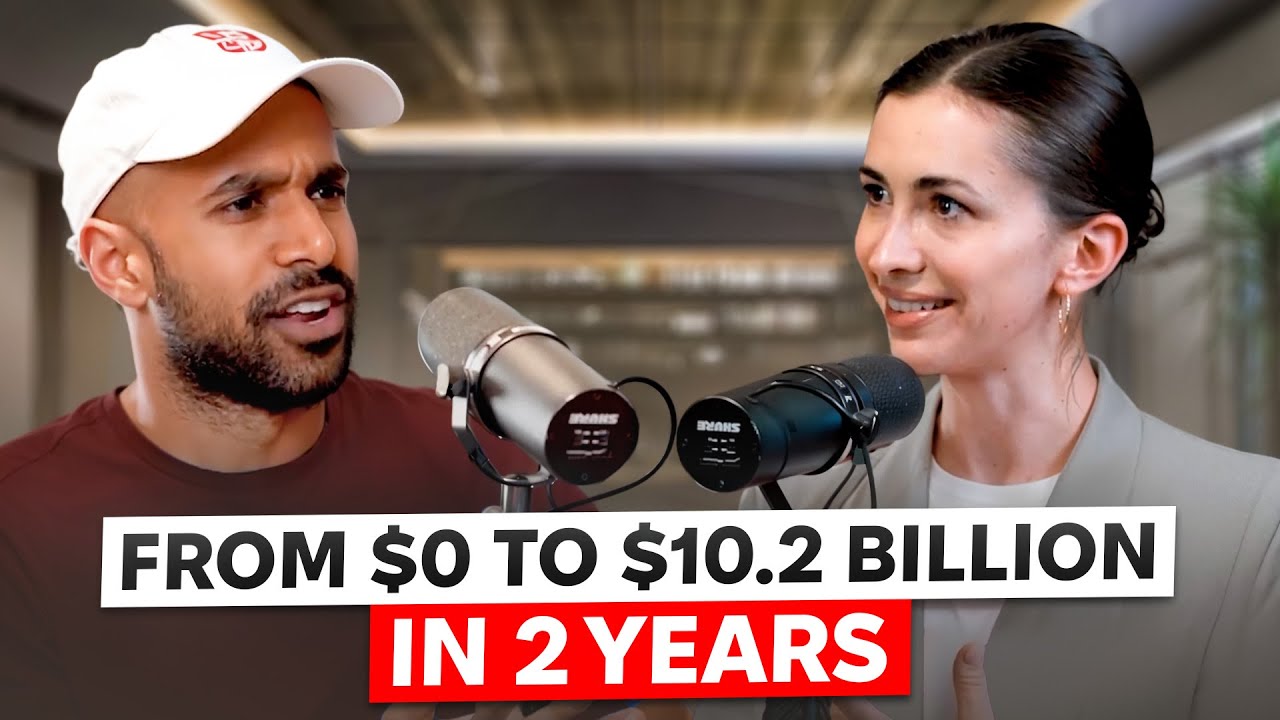
Nikil Viswanathan is an Indian-American entrepreneur and co-founder and CEO of Alchemy, a blockchain developer platform backed by Stanford University and valued at $10 billion. Before founding Alchemy, he worked at Facebook after being personally recruited by Mark Zuckerberg, and previously co-founded Down to Lunch, which became the number-one social app in the US App Store. He was named to the Forbes 30 Under 30 list and holds both undergraduate and graduate degrees from Stanford University.
Marina Mogilko: When you think about the world 20 years ago, what shaped our world? Government, religion, politics, countries. What is it today? Facebook, Apple, Google, Amazon, Microsoft, Bitcoin, Ethereum. My view was I want to build something that everyone in the planet uses. The most important thing as an early stage founder is getting product-market fit. That was the only thing that matters. Very often people solve a problem that people don't actually have. Most things you build in the beginning will not be good and people won't want them, and you have to be okay with throwing it away.
The way that all the great companies were actually built, or most of the great companies were built, was that they actually picked a market that was really small, they dominated that market, but then the market grew really fast. Alchemy was like our 16th pivot. It was really a bet of like, if crypto works, this is going to be massive. If it doesn't work, you know, we'll go back to McDonald's and we'll be fine.
The two most important things in life are confidence and persistence, and if you have both of those two things, you can do anything you want. The way I measure impact is on two axes. Your x-axis is how many people's lives do you touch. Your y-axis is how deeply do you improve their life every day. Looking back, I probably would have spent a little more time sleeping and a little more time on relationships and things like that. You have one shot at life. You don't get multiple chances.
People ask like, "What are your hobbies?" I don't have hobbies. Like, this is my hobby.
Nikil Viswanathan: Hey guys, welcome to Silicon Valley Girl. I have an amazing guest today. Nikil—oh my God, there are so many things I can tell about you. You're a founder of a company that is valued at $10 million. You have a sister who is also a founder whose company is valued at hundreds of millions of dollars. You're Forbes 30 under 30. You graduated from Stanford. You started multiple companies—most of them failed, which is great—and we're going to talk about why you kept pushing. One of them ended up being the number one social app. And you're how old?
Marina Mogilko: I'm 36.
Nikil Viswanathan: 36. Oh my, that's amazing. Basically like 100 in Startup Valley years. I don't think so. You know, I was recently at 500 Startups office in Palo Alto. They just got back to being in person, and I was surprised how many older people I saw. It was so promising to me because when we went through 500, I was 25 and there were a lot of kids, you know, just graduated from college. There were a couple of 40-something people. And now I feel like it's getting older. And you know, it gives me a chance in this industry to finally build a billion-dollar company. And this is what I want to learn from you today.
So first of all, I want to focus on your upbringing because I have two small kids. I want them to be successful and I want them to keep pushing. What do you think? How did your parents bring you up so that you are so successful?
Marina Mogilko: Oh, thank you. Well, thank you for having me. It's interesting because I don't feel like we've done anything yet. I definitely feel like we're just getting started. And I think I've always felt that way. I actually just had this conversation with my mom like two nights ago. We were talking about stories from when I was a kid, and she was telling me stuff. I think there are a few key concepts, but I feel like the most important one is this: I grew up in this super small town in Texas called Lubbock that like no one's ever heard of. My mom did something really interesting. She read a bunch of books around psychology like psycho-cybernetics and how to raise your kids. She's an immigrant. She grew up in India and came here when she was in her early 20s.
Nikil Viswanathan: And your dad also?
Marina Mogilko: Same. They came together. They got married and came to the US. She basically had this theory that you need to give kids confidence when they're growing up in whatever they do. So she spent a lot of time teaching us math, putting us in sports, putting us in anything we did. She made sure that we were really good, and that confidence reinforced and reinforced and reinforced over time.
I actually think that the two most important things in life are confidence and persistence. If you have both of those two things, you can do anything you want. For me, growing up in a small town was one of the best things ever because in Palo Alto, you can't be the best at everything, right? There's world-class competition everywhere.
Nikil Viswanathan: Exactly. There's a world-class violinist, there's a world-class chess person, there's a world-class athlete. But in Lubbock, Texas, I had the ability to be the best at everything. I was the best at athletics, the best at sports, the best at music, the best at student council, the best at math, the best at science. And you just couldn't do that in a big city because there was just not that much competition. No one cared in Texas, right? So that, for 18 years, was probably one of the core things for my mental confidence.
But then you got into Stanford, and I guess there was a lot of competition there. How did you feel not being, or were you the best at Stanford as well?
Marina Mogilko: I had a lot of fun at Stanford. I would say school wasn't my absolute top priority. I did fine, I did well. I did undergrad and grad, but I think for me I really prioritized hanging out with my friends, and I loved it. I have no regrets. I know a lot of people after college said, "Oh, I really wish I hung out with my friends more." I had the best time ever. I was really lucky to be surrounded by so many amazing people.
I don't know. I feel like I just built up that confidence over 18 years, so I was like, it was enough. If I want to be good at something, I know I can be good at it, right? Maybe it was a little bit of rationalization. I was like, well, most people at Alchemy had a 4.0 at Stanford. I didn't. I had—I say I have a 4.0 in fun. I did fine, I did pretty well, but basically I was like, if I wanted to take all the hard classes and get A-pluses, I could have, but I prioritized hanging out with my friends.
Nikil Viswanathan: That's great. I didn't do that, so I think—I feel like it's a great decision.
Marina Mogilko: That's a great decision. So basically, it was a really interesting kind of time in your life when you graduate because the early—at any point in life it is the best time to start a startup because as you grow older, you have more responsibilities, more things to take care of. The other thing I would say is, I had a good perspective. Everyone says startups are risky. I actually don't think so at all. If you are living in rural India and your company fails, you're going to starve to death. That's a different story. But if you live in the United States, your worst case is you go get a job. That's most people around the world's dream job, especially if you studied computer science, especially if you live in Silicon Valley. My worst case was going and running a team at Facebook.
And even if it wasn't Facebook, Joe and I—my co-founder and I—we talk about this all the time. If I had to go work at McDonald's, I would be employee of the month every month, and I would have no problem with that. I think for me, it's actually more risky not to do a startup because you are missing out on what could happen. I've always been wired that way. I don't mind if I try something and it doesn't work out. But I really don't like not trying or missing the opportunity.
Nikil Viswanathan: Got it. Can I ask you about this soon again because it's a great question for me as a parent? Some people tell me, "You should start saving for my kids' college fund," and my financial adviser was like, "No, no, no. Don't do it because they have to learn how to deal with money." And that was like the best experience for me. Did your parents help you with your college at all, or was it just you paying it back?
Marina Mogilko: Stanford has this really interesting thing where you can be a teaching assistant and they will pay for you. It was really nice because I love teaching, and I got to do what I loved and they paid for it. It was interesting because that's actually how I met my co-founder Joe. The first semester, you know, you're a new grad student and no one knows you. There's kind of a lottery system and they pick you. I actually either didn't get a TA ship or whatever, but I made friends with one of the ladies, Meredith, at the Department. She helped me get a TA position the next quarter. I worked really hard, and I think we did a good job. The next quarter, several professors actually messaged me beforehand like, "Hey, there's this matching process, but can I just snipe you early?" Stanford provides a really good safety net for people where it's not that hard. It's pretty easy and a lot of fun.
Nikil Viswanathan: Got it. So you met your co-founder during graduate school. You've started how many companies together, or iterated how many ideas? This year will be year 10. I think Alchemy was like our 16th pivot. Have you ever thought of giving up? Like, not at all?
Marina Mogilko: Not really. I mean, there have been a couple of times when people came to buy us, and we never actually seriously considered it. Several times, actually. But for Alchemy—I'm just talking about in general. When you start all these startups, before pivot number 10, like any thoughts of, "This is not for me. I'm not a good entrepreneur because nothing is working out"?
Nikil Viswanathan: Honestly, no. Because I just knew I was like, this is what I want to do and I love it. It's a lot, and it's fun, even if it's not paying for anything. What was okay—what defined success for you then? Because there had to be something you were like, "Okay, this is my metric for success, and this is why I keep going."
Marina Mogilko: No, I just had a different view. My view was, I want to build something that everyone in the planet uses, and that's what I want to do with my life. I'm just going to do it or die trying. One of those two things. I think I just had this view of what would I do if I did something else.
Actually, we did this thought experiment once. People were like, "Hey, we'll buy you. We'll pay you a bunch of money." And just for context, Joe and I lived together in a tiny apartment. We worked out of that apartment. Everyone said, "Don't live with your co-founder. You'll kill each other." We lived together for five years and we never got into a fight. It was awesome. Out of 168 hours in a week, we were in the same room for like 164 of those hours, in the same apartment, working out of there as well.
When we thought about it—and I was nine years out of undergrad, seven years out of grad school before we started paying ourselves a real salary. When I say real salary, I mean it was less than a new grad at Facebook. But I got guacamole on Chipotle for the first time that year, and I was like, "Alright, we made it."
Nikil Viswanathan: Did he have the same vision? Were you with 100%?
Marina Mogilko: I think so. And I think when one of the times people wanted to buy us, we said, "What would we do if we had a bunch of money?" And the answer was, "Exactly what we're doing now, except we'd have all our friends live together." I think for us, we just really enjoy it. At the end of the day, it's like this is what we love. People ask, "What are your hobbies?" I don't have hobbies. This is my hobby. I just work, work, work, work.
Nikil Viswanathan: So let's move to Alchemy. You built one of the apps that got number one—that was like the messaging app, the Lunch app, yeah?
Marina Mogilko: Yeah. Let's talk about that one and then to Alchemy. Can you talk about that a little bit?
Nikil Viswanathan: Yeah, so it's really interesting. The way I think about my life is, you have one shot at life. You don't get multiple chances, right? Kind of religion and reincarnation aside. So how do you have a really big impact? I think the way I measure impact is on two axes. Your x-axis is how many people's lives do you touch. Your y-axis is how deeply do you improve their life every day. So number of people times depth of impact, and the area under that curve is how big of an impact you have on the world—a positive impact.
For me, the x-axis was obvious. Never before in human history could you do this on a magic metal box and build something everyone on the planet uses. But now today you have software, you have internet, you have computers, and you can do that. When you think about the world 20 years ago, what shaped our world? Government, religion, politics, countries. What is it today? Facebook, Apple, Google, Amazon, Microsoft, Bitcoin, Ethereum.
The idea was that that's what I really loved from a young age. I got to see my mom do it, and I was like, "Alright, this is what I want to do." The y-axis was really interesting. How do you really have daily positive impact on someone's life? I went through a really tough time post-college. I started this product company that didn't really work. I had a falling out with a co-founder. I got dumped by a long-term girlfriend. I was really lonely because I was surrounded by all my friends in college, and then suddenly you're working by yourself. You're not living with your friends. It was a really tough time.
I realized that the number one thing that determines your life is the people you're around on a daily basis. Right? What if you had all the people you truly cared about in your life every single day? How awesome would that be? For me, I said, "I want to do that, but I want to do it for everyone on the planet." That was the driving force. We spent a bunch of time building social apps to do this. We wanted to capture that dorm environment—like when you talk to your best friend at 5:30 in the morning, you have this certain vibe. How do you capture that?
We built like six or seven different apps. Nothing really worked. Then finally we built this one app. There were our two friends, Rav and Martin, who we moved to San Francisco to be around. We were working all the time, and we'd always see them walking to Safeway. We'd walk there to get these $6 computer boxes because it was the healthiest, tastiest, most filling, cheapest option. I got the healthy one. Joe got the unhealthy one, but he's still in ridiculous shape even though he eats junk food.
Basically, whenever we'd walk there to get lunch, we'd see our friends and we'd be like, "Oh, we should hang out, we should hang out." But then whenever we were free, we'd be like, "Oh, who's free? We don't know. Let's try to text people." Then we'd just go to the gym by ourselves because people wouldn't respond.
After like a year, we were just like, "We never see these guys." It's just annoying to text everyone. What if you just press a button and it would automatically text all our friends and say, "Hey, do you want to get lunch? Do you want to hang out?" We were like, "No one is going to use this. It's literally just our friends." It wasn't even in the App Store. You had to go to my Facebook profile and download it from an Enterprise build link that we did. We thought no one's going to use it, and it basically just ended up blowing up. That was a much longer story, but the short answer is we did that for a while. We built version two and three in secret, and then kind of switched to crypto.
Before you built that out—when you had this idea of blasting everyone with a message, your initial thought was like, "I want to impact as many people in the world." Did that correlate with that thought? Or were you just solving your own problem?
Marina Mogilko: It did. It really did. Because we had said, okay, we want to make it feel like you live with your friends, and we always thought that would be digital—like sharing stories in a digital way, kind of like Snapchat but more text-based. Then we said, "I don't know, what if we just made it easier to out people in real life?" But I do think at that time we had pivoted so many times. I think the pivot right before that was, we were like, "All right, we just want to make something that people use," like even if it's not this grand idea. I'm just going to talk about why I keep going.
Nikil Viswanathan: That's the thought I was looking for, right? Because you can't just otherwise—if all of your ideas have to be this grand idea, "I'm building the next Microsoft," it's so hard to even start. And that's actually not the right way. We learned that was not the right way. We did not brainstorm ideas in the right way. I can talk about brainstorming, but basically, we built a bunch of apps no one used. No one liked any of them. I mean, a few people used it, but no one was like, "Oh my gosh, this is amazing."
At one point, I think we started building all this random stuff just for fun. We built a smart home system. We built a fridge where you could go to raterfridge.com and see everything in our fridge. We scanned all the stuff in our fridge and friends could comment on it. We started this bodybuilding food delivery service. We were like, "Oh, let's solve a problem that we have." So we tried. We ordered Blue Apron, which is this cooking kit that comes with food. We opened the box and we were like, "What are we doing? We don't know anything about operations, and we don't even know how to cook." So we put it in the freezer and never touched it again until we moved out and threw it away.
But I think at this point we were like, "We just want to make something that works. We just want to make something that someone uses." So we were like, "Why don't we just try to solve our own problem?" It's kind of back to solving your own problem. So we didn't want to make something that could be something that people use, but it wasn't like, "This is going to be the big thing."
Marina Mogilko: And I think that's the thought process. I think you see that. There's a good thing around how most great companies, especially in the consumer social space, were not built as a company. It was built as a side project. Because when you look at the great consumer apps, they are built in the very beginning as super simple things built for a very singular purpose. And most of the time, those don't look like real businesses.
Nikil Viswanathan: Yeah, or even Snapchat. You look at it and you're like, "Oh, I want an app to send pictures of my poop," which is how it started at Stanford. Or nudes to people, right? It's like, if you said that at Facebook—if you're like, "I want to build this as a product"—you'd be fired. But then that evolves into so much more. Or even Facebook, right? It was literally just a way to see who's in your classes and, like, rank attractive girls. That was what was at the beginning. But then it turned into something big.
I think there's this whole thing around when you're trying to build a company. You build something that you think is company-worthy that you can share with your friends and all this stuff because your ego is wrapped up into it. And invariably, those things are almost always way too complex, not actually solving a real pain point, not figuring out a very specific need for a set of people. So I think it's very difficult to build a company just by brainstorming how do we build a good...
Marina Mogilko: And when do you give up on the idea? What's your criteria?
Nikil Viswanathan: Okay, this is actually really important. I think that most people hang onto the idea way too long. Like, way, way, way too long. How long? So let me give a couple of examples. I think the most important thing as an early-stage founder is getting product-market fit. That is like the only thing that matters. All the other stuff doesn't matter.
When you think about building a product, you need to be kind of excited about what you're trying to accomplish in the world—like, I want to bring people together or I want to build something in this space. But you need to be very flexible on the method and the approach. People get very attached to their product, me included for sure. We got very attached to our product because you're building this thing. Especially if we go back to what we were saying before, especially if you make it feel like, "Hey, this is me. My company. I'm starting this thing." You turned on Facebook and now I'm going to start this thing. It has to be good, right? But the problem is, most things you build in the beginning will not be good, and people won't want them. You have to be okay with throwing it away.
Concretely, for a consumer product, if you don't find retention in your early users, you should be fine throwing it away. You should not spend the faster you can iterate the better. The iteration speed is like the number one metric you should watch in the early days of a startup, right? How fast can you ship product? We got that cycle time down to like a couple of minutes. I can tell a story about how I do that, but I think if you are spending more than, call it, like two weeks talking to users and getting feedback, and people don't really want it, you need to change something about the product or scrap it. You should not spend more than, I would say, two weeks is like the absolute upper limit of time you should spend on that.
What's the maximum you spent on an idea?
Marina Mogilko: Oh, I've spent years. I've spent like one of our early products. I probably spent maybe a year half-iterating, changing it slightly, talking to users, building stuff, getting some people on. I was doing this, but if you really want to move fast and get something well, like okay, you can change stuff and you can tweak it. But you should never go more than two weeks without getting feedback and shipping a new version, tweaking it.
Because, especially—and this might be oriented a little heavily towards consumer social—there's always this question of, "Do I just not have network effects? Do I not have enough people using my product? Or is it that no one just wants what I'm building?" Right? Or the market is there, but I just can't find the right problem.
Nikil Viswanathan: Exactly right. And I think the most important thing is, very often people solve a problem that people don't actually have. You should make sure that someone actually has this problem. This is where you go back to solving your own problem.
Marina Mogilko: Exactly. So if you can solve your own problem, then you know that that's actually at least a problem for like one person. It at least exists.
Nikil Viswanathan: Yeah, yeah. It exists at least for you. Okay, is this how you started Alchemy?
Marina Mogilko: Yeah, actually it was. So we sat down and brainstormed in the wrong way where we didn't really know much about crypto. But 2017 happened, and it was summer. We were building our startup in our loft in San Francisco. Downstairs were these guys, Yanni and Michael, who were building a Bitcoin payments company. We played beer pong together, and they were like, "Crypto, crypto, crypto." We always really believed in it, but we were laser-focused on what we're doing and in our mission to consumer social.
Basically, what we did was we said, "Hey, we have summer off because we have a college app and college people are out for the summer. Let's try crypto stuff because crypto is blowing up at the time. We said, if this is the next internet, we could build something really great here. It's kind of a once-in-a-lifetime opportunity." Then basically it started taking off, and we're like, "All right, we're just going to do this full time."
In the beginning, we brainstormed in the way you're not supposed to. We kind of sat in a room, wrote out a bunch of ideas, and thought about what people would want. Instead, we should have gone deep into the space and actually talked to a bunch of people. We started building this hedge fund data science machine learning platform. But as we're building it, we're like, "Wow, this is really hard to build." And if it's hard for us, how's anybody else going to be able to build in the space? Because we had master's degrees in artificial intelligence from Stanford and information systems and stuff. We're like, "Okay, if the space is really going to be broadly accessible, it needs to be accessible to a novice engineer, to a new developer, to people in other countries who don't have access to the kind of depth of educational resources that we had access to."
So we need to make it easy. In a way, it really was solving a problem for us. My sister had tweeted this thing, which was actually spot-on. She's like—I forgot exactly what it was, but she said something like, "Hey, startup founders, let me save you two years of effort. Whatever you're doing, you should just pivot to doing the infrastructure for that product instead." It was so true. It was exactly for us.
Nikil Viswanathan: Yeah, interesting. So you started Alchemy in, it started growing in 2020, right? 2021?
Marina Mogilko: So we started it in 2017. Then 2018 was kind of when we launched the product as it is today, end of 2018. But it was really like two years before it started really taking off, because crypto started taking off. Right, because crypto started taking off. How do you feel about being in a market that's so dependent on whether it's hype or not?
Nikil Viswanathan: Hard. Oh man, it's really tough because I think it's a huge risky bet to take. I mean, crypto is still small today, right? In the trade-off here, when you think about this graph, either you can build a business that is in a big market or you can build a business in a small market.
A business in a big market will have a lot of competition. But a business in a small market would have way less competition but the market is really small. The way that all the great companies were actually built, or most of the great companies were built, was that they actually picked a market that was really small and they dominated that market, but then the market grew really fast, right? Which is hard to do because you have to pick something that you have strong conviction will grow when other people don't think it'll grow.
Do you have this conviction?
Marina Mogilko: I do. I do. I definitely do. I'm not sure about the time frame though, which is a challenge. I think we had some belief that it could be really big in 2017. We actually thought we missed it. We thought we were too late. But 2017 was like actually so early. I remember seeing Bill Gates say the same thing. He's like, "Oh, we thought we were missing the computer revolution, but they're actually early." So I think for crypto, that is probably one of the most challenging things about being in the space—because your total market size is very limited, and it's like somewhat in your control.
I think for us, it's more in our control because we can help the space grow with developers, but it's not directly in our control. And to some degree, that's something that's challenging. When we started, we did a market sizing. If you go to VCs, they're like, "Oh, everyone's pitch deck is like, 'Our market—healthcare market is a trillion dollars, climate market is a trillion dollars, AI is like a trillion dollars.'" We literally did a market size. We're like, "Okay, if we get all the customers in space..." we'll just guess how many there are. Like, probably like $5 million. If we get every customer, we're like, maybe $10 million. You know, this is 2017. But the space has grown significantly since then, but it was like tiny.
It was really a bet of like, "If crypto works, this is going to be massive. If it doesn't work, you know, we'll go back to McDonald's and we'll be fine."
Nikil Viswanathan: Let's explain a little bit the concept of what you're building to everyone who's not familiar. Can you give me real-life examples of how I am probably using your technology without knowing it?
Marina Mogilko: Yes, 100%. So basically what we do is we are building the developer platform for the web3 space. What that means—let me give you an analogy. So if I'm buying a CryptoPunk, right, I'm buying it through you?
Nikil Viswanathan: Yes, yes, yes, yes, exactly. And that counts as your revenue.
Marina Mogilko: Yes, yes. So basically, like when you think about the last couple of shifts in technology—there's the computer, and then there's the internet. These are big shifts in the last 50 years and 1500 years. For the computer, there are apps like Excel, Word, Chrome. When you want to build those apps on top of the computer, you needed something, right? You needed a platform, and that platform was Windows and Mac.
Windows and Mac hide all the complexity of RAM and CPU and hard drive and all these things, makes it really easy for people to build apps, right? And that spins the cycle of innovation in the industry. You have developers building apps, so more users come, some more developers, and so on, right?
For the internet, you have a similar thing. Anytime you open Uber or DoorDash or Airbnb, it's actually powered by information on that page. Like when you look at cars driving around, it's actually powered by a company you've heard of that you never heard of, called Amazon. Amazon has two businesses—one is their shopping business, and the other one is where they make all their money: Amazon Web Services.
In 2021, AWS was 75% of their profits. In 2022, it was 100%. So basically, Amazon is effectively a computer company. Whenever you open Netflix, Amazon is actually running the computers that show you that.
For us, whenever you use a crypto product, like we are helping behind the scenes to power that application. If you open Robinhood and you buy crypto, we help with that. If you open OpenSea and you're looking at an NFT or buying that, we're powering that. We're taking that data from the blockchain and putting it there, right? And there's a lot of really exciting real-world tangible examples coming up.
Nikil Viswanathan: It's not just NFTs and trading crypto. Can you name more?
Marina Mogilko: Yeah, so we partnered with Shell to do their global supply chain for all their equipment. They're moving equipment around the world, and we work with them to power that.
Nikil Viswanathan: How does it require blockchain?
Marina Mogilko: So right now, supply chain is kind of one of the canonical examples of blockchain because it's very difficult to track supply chain. They're basically tracking all that inventory on the blockchain.
Nikil Viswanathan: Oh, makes sense. That's interesting. And it's interesting because it's like this perfect example of where you have a bunch of different companies involved in supply chain. If you think about what goes into making an iPhone, you have the person who makes the glass screen, and the person who makes the glass screen is not Apple. It's somebody else. Those people have people who make the components for the glass screen. Those people have components for the glass screen from somebody who makes the silicon for the glass screen. It's like eight layers down. Tracking all that is a crazy, crazy, crazy difficult thing because those people are not going to trust one random company to store all their data.
So you have to have this kind of open blockchain that's open source. You can trust it.
Marina Mogilko: Exactly. So, you know, can you talk about the percentages? Like, of your total revenue, how much goes into that type of stuff? How much goes into consumer?
Nikil Viswanathan: Yeah, I mean, it's kind of all across the board. So we power everything from NFTs to crypto trading to decentralized finance to real-world assets—people taking stocks and bonds and putting that on the blockchain to make it more accessible for everyone to trade—to things like Shell. You know, we work with some of the largest brands in the world. You open your phone and you look at these apps. We're working with a lot of those. I think there's like a wide spectrum of applications, which is one of the cool things. Because our success is not dependent on a specific industry vertical. If anything in crypto succeeds, we benefit from that. So our incentive is to help everything in the space grow as much as possible.
Are you upset with the current state of the market?
Marina Mogilko: No, I think one thing that's been really interesting is the crypto market went down like 84% from end of 2021 through late 2023. You saw an 84% decrease in crypto prices. The thing that was most exciting to us is the number of developers