Life-Changing Lessons I Learned From The Top 1% — Silicon Valley Girl Podcast
Entrepreneur, content creator, and founder based in Silicon Valley. Marina interviews the world's top tech leaders, investors, and innovators to uncover the trends, strategies, and mindsets shaping the future. With millions of followers across platforms, she brings a unique perspective on technology, business, and personal growth.
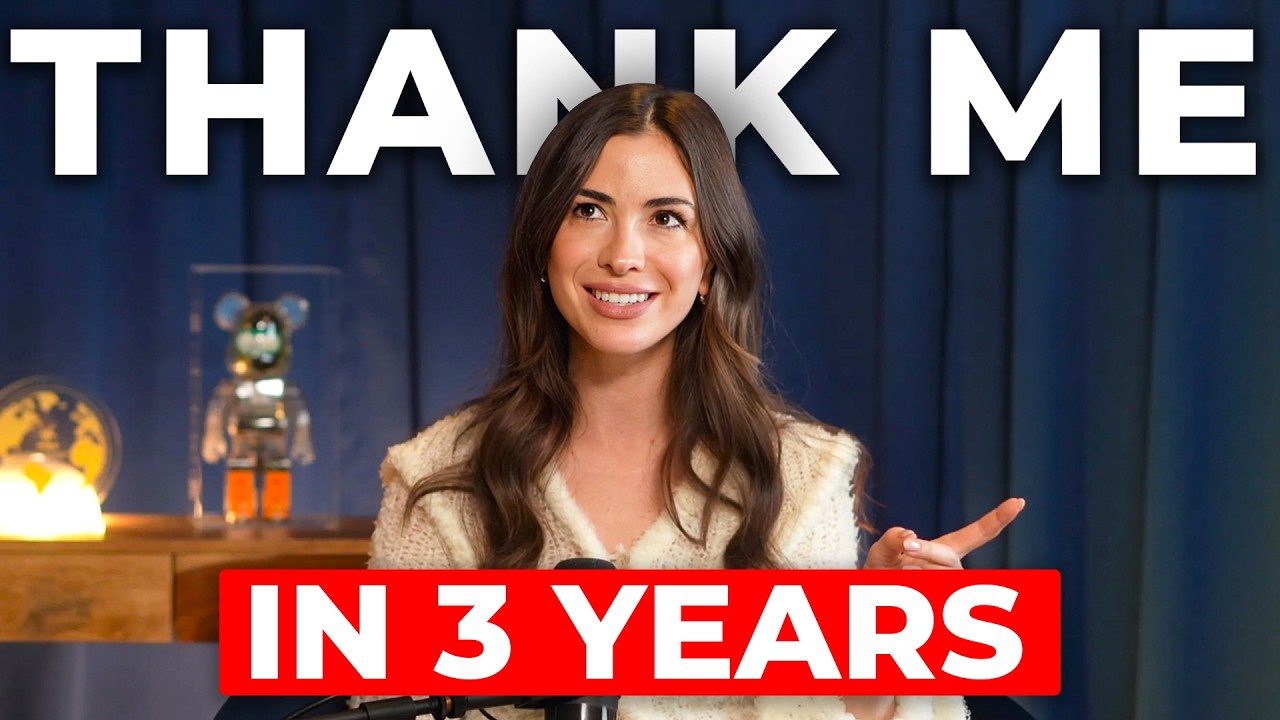
Marina Mogilko: I've spent 10 years in Silicon Valley talking to the most amazing people and studying what actually makes them successful. And there are some common things that they do all the time. And it's not about waking up at 5:00 a.m. It's not about hustling and grinding all the time. It's about some of the habits, some of their behaviors that they implement in order to become successful. And I think I've summarized most of them in this video. And honestly, for me, such a revelation and realizing these things made my life easier because they're kind of easy to follow.
But anyways, here's a quick story that I wanted to tell you before we jump onto the rules and everything. I just had a meeting with a lawyer in Los Angeles, and it's funny how celebrity lawyers—they're not really drafting documents, they are making deals happen. So he has one celebrity come to him and say like, "Hey, I want to publish a book," and he just makes this happen and gets a percentage of it. He's been doing this for 30 years and worked with the most amazing celebrities. And I asked him, what do you think makes people successful? And he said, 100% luck. And I was like, but okay, that's not very encouraging because how can I make luck happen to me? He's like, your task in this life is to make sure you run towards luck, is to make sure you create special conditions for luck to come to you. And these conditions are created by repeating the things that we're going to talk about now in this video.
This episode will also be very encouraging to people who don't feel like they're the most talented people in the world—me. Because sometimes we think that we need to be the most talented or the smartest person in the world to be successful. That's not true.
Let's start with rule number one: help without expecting a return. And this is something I've noticed when I came to the US. This American mindset values helping others freely. So when we came to Silicon Valley, I started asking people for intros. And honestly, I thought a lot of them would say no or ask for a percent of the deal if it happens. And nobody ever asked for anything. They were just introducing us to their investors. They were introducing us to their peers. And when a deal happened, I asked one of the guys like, "Do you want like 1% or something?" He's like, "No, Marina, like I just wanted to help." And this mentality—"I'm going to help you now" and "I don't really expect anything. Maybe you help somebody else and that somebody else helped me someday"—but this is the mentality. I want you to see that I'm open to helping. And I see people generously share contacts, resources, and knowledge. And from day one, I tried to embrace this culture because this is not really something that happens back in my country. There are a lot of kind people, but this is not like a business culture of just making things happen for others.
So I started building relationships with companies by offering genuine consistent help and I am never really paid for that. I just want them to see that Marina is here for you, Marina appreciates your work, and Marina wants to help. And this led me to some amazing deals. I'm not going to say the names, but I was helping some of the bigger companies figure out marketing, figure out how to work with creators, and then they came back to me with a big deal. I'm like, "Oh, that's amazing. Thank you." So it does pay off in the long run, not necessarily even with the companies or people you help, but from others who notice your value.
Rule number two—and this is honestly something that makes me kind of relaxed. So I talked to Coco Rocha, I talked to this lawyer, I talked to a lot of people in the industry and I'm like, is there a number of years that you need to stay in the industry in order to become successful? And a lot of people tell me this: success comes after 5 years of consistent work. It's different for everyone. I'd say for me it's like yeah, four to six years—I see significant results. But then I was looking back in my life and I'm like, yes, Lingua Trip—we started building in 2011. We raised a venture round in Silicon Valley in 2015, four years. I started a blog in 2014. In 2021, I became the first creator to raise a venture round. That's like seven years, right? I'm like, this is fascinating. This rule actually works. But you have to be all-in in something that you do and you have to love it. And you'll see magic things happen after 5 years.
And even now, like I just got a Hollywood agent who represents me. I'm building this podcast, but I actually started this movement back in 2018 and now I see some exciting progress and results. So give yourself some time. And in order to be able to consistently work on something for 5 years, you need to find a way to make it right. You need to figure out a certain lifestyle and certain schedule that works for you.
And here comes rule number three: Separate your work from who you are. Because if you're failing at your work, something happens and you start blaming yourself. And this happens to me all the time. Really, guys, I'm still working on it. When my video is not performing, I think that I'm not creative enough. When somebody blames me online for doing something wrong, I think I'm a bad person. I'm working on it, but it's really hard. And I've never met anyone who said, "Oh, I'm completely over it." Everybody, especially workaholics like me, we really connect ourselves to the results of our work, which is not healthy. If you do this constantly and you fail at work, it doesn't mean you failed as a human, right? You start over again. And actually disconnecting yourself as a personality from your work gives you energy to stand up and continue fighting. So success, failures—they are just stages in your career, not a reflection of your worth.
And the mindset that really helps me is that I separate myself into three people. Well, there is Marina as a personality, but then there are three professional Marinas. Marina the entrepreneur who thinks about making money and making her business successful. Marina the producer who thinks about how we position ourselves, what's our brand, who do we work with? And Marina the actress who's talking to camera. It's not like I'm acting really right now, but I speak in a certain way to my camera and it's not the way I'm going to talk to my husband or my kids. So it's still like some kind of acting, right? And when you get some feedback, positive or negative, it doesn't go to Marina as a person. It goes to one of these personalities.
Oh, Marina the actress—you just got laughed at for your accent, you know, but that's fixable. That's a business process. You can just hire an accent coach for another couple hours and work on it. Or Marina was not approved for this campaign. Well, okay, Marina the producer has to think about proper branding because if Marina wants to work with these companies, she has to present herself in a certain way. It's just a business process. Not that the brand is telling you you're not worth it, goodbye. Just you don't fit them right now. So remind yourself all the time: feedback is about the role, not you as a person.
Speaking of separating roles, when you're running a small business, wearing multiple hats is just part of the job. Let's take email marketing. So Marina the entrepreneur in her company has to figure out different ways to market the company. And in our case, 21% of our sales come from our email marketing. And because in every small business, the founder kind of oversees everything, I try to automate as much as possible.
Rule number four, and that is: be kind to everyone. Again, when I was talking to Coco Rocha and she told me a lot of stories about top models, she told me that the ones who really made it in the industry are also extremely kind people. And she told me this story about Carly Clauss. I think she started her career when she was 14 years old and she really loved baking. She baked cookies and every Friday she would go to her agencies and just give them those cookies because that was the kind of person she was. And because she was there every Friday, the agencies were like, "Oh, of course we have Carly. Let's give her that contract." So it's not like you're kind to get the contract, but being kind to people pays off because at the end of the day, we don't want to work with the most talented people if they're jerks. We want to work with people who respect us, who are good at their craft, and who are also kind and comfortable to work with.
And by the way, now Carly has her whole cookie company. So you know, fashion turns into business. One thing I want you to remember is if you want to build something grand—a business, maybe you're a social media brand—you're going to be in the spotlight. So if you want to build something big, if you want to be successful, you have to make the switch now. If you've treated people badly, don't do it anymore. Like, you have to stop now because even small things matter.
Rule number five: own your mistakes and tell the truth. I talked to a lot of PR agencies and I did some PR trainings with publicists that have experiences in managing and navigating conflicts. And some of them told me like, oh, if something happens, you just never comment or deny everything. But what really works long-term is acknowledging your mistakes and explaining your side of the story. And sometimes admitting a mistake is more effective than deflecting it because people want to see that you're human, and if you've messed up, admit it. If you're being criticized, explain. And that makes you more human and real. It doesn't make you weaker. I think honesty earns trust and respect.
Rule number six, and super important: don't quit the industry just because it gets tough. You know, these days you open your Instagram and you see reels and you see this guy who's in real estate, he's flying everywhere in a private jet, or this gal is an actress and she leads this amazing lifestyle, or this mom—she has four kids and all of them are so cute. And because you only see the positive side, you might be like, "Oh, my life is bad because I chose the wrong industry. I need to become a real estate person right away." Nah, not how it works. Every industry has its problems. Having four kids is a lot. I can't even imagine. It's just those problems—they're not visible upfront. And if you like the industry, you just have to figure out the way you can stay in it.
Warren Buffett says, "If you don't want to do something, find a way not to do it." In order to stay in the profession for five plus years, you need to focus on things that you really enjoy doing. And for example, if you're a content creator—and I can talk about myself here—I love creating content. I hate editing. I delegated it in the first year. I don't really like being on calls with my team. So all of our calls happen once a week and they're 30 minutes long because I don't want to be on a call. Like, there are certain things that you can work around to make every day in the profession exciting. And of course it's impossible to make like every day the most exciting day ever. 20% of the days you just get through them. But try to improve the process step by step without jumping industries because believe me, you're going to jump to another industry and you're going to encounter the same problems.
Rule number seven: constantly reinvent yourself. Oh my god, this is a big one for me too. When you're staying in your industry, it doesn't mean you have to be the same person. If you're working in real estate, doesn't mean you just have to be selling houses. Maybe someday you start teaching people about Airbnbs or you start your own blog or you start a school for other real estate agents. I don't know. You figure it out.
For me, I'm a content creator and a lot of people know and still know me as Lingo Marina, a person who talks about English and standardized tests. But I am no longer just that. You know, I've recently changed my handle on Instagram to Silicon Valley Girl, so please subscribe because Marina now is more of this business person who likes to talk to amazing people. And I became more and more passionate about singing and acting and I love marketing. I'm reinventing myself. This year I'm focusing on my podcast. Next year I might be focusing on having another baby. And in two years I might explore acting. And this what makes your life exciting for you. And if you're a public person or you're building a personal brand, that what makes it exciting for them to watch you.
And I've always been scared to make big changes because I was like, oh, but this is how people know me. And then I realized that I'm trying to do something that I no longer enjoy as much is just going to drain me. I'm just going to burn out. So just realizing that you don't have to stick to an old version of yourself is so liberating. And I'm giving this freedom to you guys. Just go and change. If you always wanted to start singing, just go ahead and sing. If you always wanted to start acting, just take your first acting class. Oh my god, it's the best experience. You can live three lives in an hour if you're doing three different scripts. And a lot of people wouldn't get it. And I used to get a lot of messages, still get them, but weren't you an English teacher? Keep evolving. It's okay. Some people are going to leave you, but new people are going to come in.
Rule number eight: give 100% to whatever you do. When I first came to the US and I was talking to some successful people and I asked them like, "Can we jump on a 10-minute call?" Sometimes they said no. Well, most of the times they said no. And I was like, "Why on earth would they say no to a 10-minute call, you know, especially when we had that meeting already and I just need some advice from them?" Like 10 minutes is nothing. But later on, I realized that people here, successful people here—if they do something, they give their full presence to what they're doing.
For example, Reed Hoffmann only had 30 minutes for our interview. But he was so engaged once he walked into the room. His full attention went to me. We had this small conversation. We had an amazing conversation for the podcast. We had an amazing conversation after the podcast. And I interview a lot of people from other cultures. And I would say not all the cultures do that. Some people come to my interview and they're on their phone, then they talk to me and then they're back on their phone. And I'm like, you know, if Reed Hoffmann can't really dedicate himself to a 30-minute thing, why can't you?
And this is what made Reed successful—because if he does something, he does it 100%. If he's on a podcast, he does the podcast. He's not answering his emails. And I'm sure he says yes to only 1% of all the opportunities that come his way because he can give 100% to what he chooses. Do that. Don't spread yourself thin. Just if you said yes to something, be there 100%. Everything you do should be done with taste and respect. Even the smallest task. Be a professional in all things you do. How you look—do you like this look, by the way? How you speak, how you run your business, how you run your social media. And again, if you ask me 5 years ago, Marina, do you care about your style? I'm like, no, I'm still figuring out my way in business. But once you get this ambition of becoming a leader in your industry, top 1% of the world, you just realize it goes into everything.
Rule number nine: be ambitious. Americans are friendly and approachable, but they're so ambitious. They think big, even if they don't say it out loud. So I just had this call with Instagram and I have an amazing manager there. Hi. And what she told me—she's like, "Marina, you are the Silicon Valley girl." And she drew the whole image of me. Like we were switching, we're rebranding, brainstorming this rebranding strategy together. And she's like, "Marina, I see you as this leader who's a female who has kids, but who also loves business and innovation. And whenever you do something, you have to ask yourself like, would Marina, that Silicon Valley girl, that innovative entrepreneur do this trend? No." So everything you should do should be aligned with that new reality that you're building for yourself. So draw this big vision for yourself and act like you're already there.
And rule number ten might be upsetting for some of you guys, but I'm sorry—networking is everything in the US. So many things happen through personal connections. I got one of my biggest contracts this year just because I met someone at a party 3 years ago and I got this contract alongside with top, top, top creators. I'm not a top creator. I'm not even like in the top 50 creators, but I got the deal first because I met that guy. Hopefully because he saw that I respect others' work and I respect my work. I try to do everything with 100% effort as much as I can. I take my work seriously and I see this happen a lot. Not just to me, but to me this year is really like—I see a lot of things coming together. But I see that people and companies prefer to work with people they know. Just because you avoid surprises, just because you know what to expect, what quality of work to expect, what type of commitment to expect.
And this proves again—and all of these rules, they just prove again—you don't need to be the most talented. You just need to be good at what you're doing. Treat others and your work with respect. Put your heart into the task. Don't cut corners even on small things. That was it for me for today. Let me know if this was encouraging. Let me know how this resonates with you. And I'm looking forward to reading your comments.