From $0 to $9M: How an Immigrant Turned Failure Into Fortune | Jenny Lei, Freja — Silicon Valley Girl Podcast
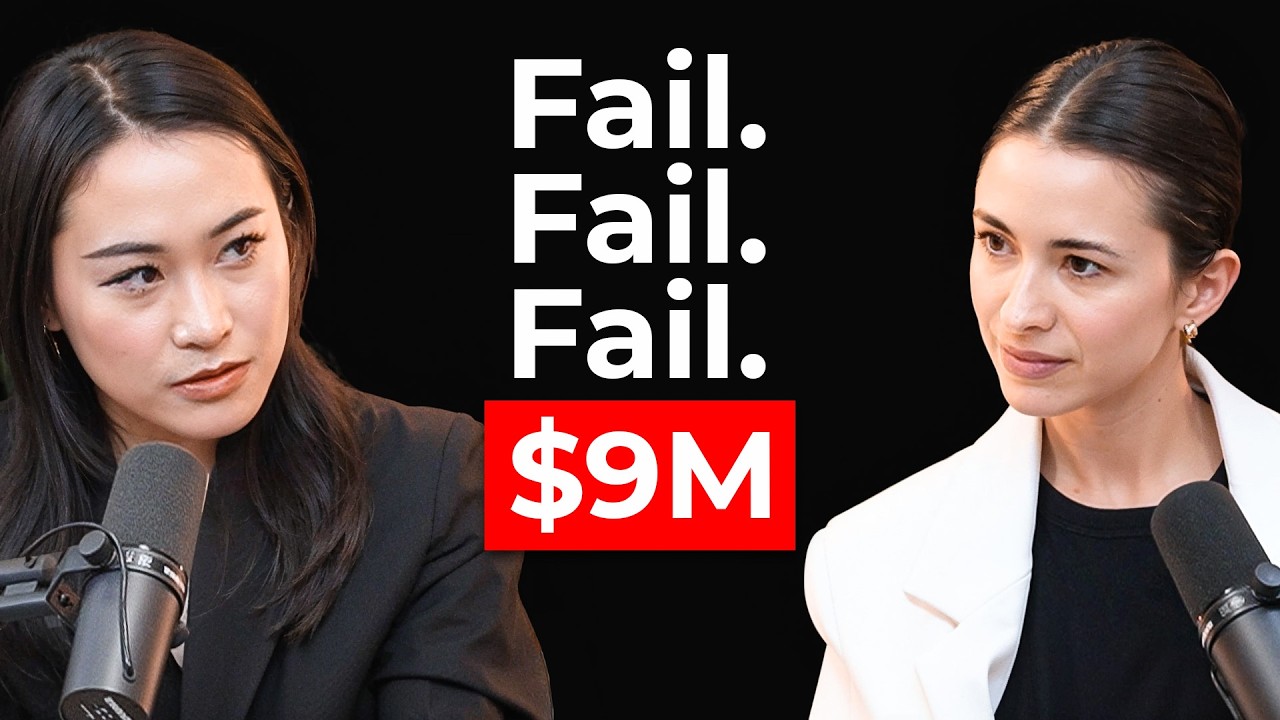
Jenny Lei is the founder and CEO of Freja New York, a direct-to-consumer vegan leather handbag brand she launched in 2020 with an initial run of 300 bags. Born in China and raised largely in the United States, Jenny built Freja without a design background, leveraging years of e-commerce and dropshipping experience to scale the company to over $9 million in revenue. She secured an EB-1 visa through her entrepreneurial achievements and has grown Freja into a brand worn by high-profile celebrities and influencers worldwide.
Marina Mogilko: Your business makes over $10 million in revenue annually. I love New York. If I want to stay in this country, I need to make money. You're from China. Did you have a US passport by then?
Jenny Lei: I don't have a US passport.
Marina Mogilko: Oh, so you were still on a visa. I'm also trying to sell a work bag right before launch. Hey, we're live. Not a single person bought. Oh my goodness. But now Haley Bieber wearing one of our bags. And then I saw Amal wore your bag to court.
Jenny Lei: It's a part of our story now.
Marina Mogilko: If you don't tell your story, someone else will. Jenny, thank you so much for being here. I'd love to talk about your business and your journey. First of all, can you walk me through this mindset? You're in New York, and you have no design background and you're like, "Let me start a brand that makes bags" and it's a highly saturated market. You have all the designers you can think of. What was going on in your head?
Jenny Lei: A lot of things. Well, first of all, thank you so much for having me. Freya started as my dream to design the perfect work bag for modern women. But why bags? Like there are other ways to make money. The reason why bags—I don't really believe in oversaturation. I think you should go fishing where there are a lot of fish in the water. I think trying something new that totally no one else has ever done is actually a lot more risky.
Why bags is a twofold story. When I graduated from undergrad, same situation. I had to make money because I didn't have a job. I Googled how to make money fast online and I found drop shipping. You probably found all of those YouTube videos, right?
Marina Mogilko: I did. I went to YouTube University.
Jenny Lei: I did too. So I was like, "Okay, this is my thing. I'm going to try this." I made I think six stores, maybe got like one or two sales this whole time. And then my seventh store, I was drop shipping bags from China. And that worked really well. So I'm like, "Okay, I know how to sell bags. I know what kinds of bags people like. I know what colors. I know what countries."
Then I kind of shoved that idea aside. I still went back to grad school. I was like, "I should be a designer. I want to be a UX designer." I went to grad school for that. I was like, I think this suits me. I should still find a job. And then halfway through grad school, I was preparing for a very important interview. This is like my last chance to get a job in my head. And the night before the interview, I couldn't find a bag that I could bring to this interview. I wanted to walk in feeling confident. I was supposed to be there the whole day. They let me go after three people talked to me. And they're like, "Okay, you can go now." So I'm like, "Okay, I don't think I got that job."
I went to Bryant Park and I sat there and I thought, "Okay, what can I do? I'm not going to get this job. If I want to stay in this country, I need to make money. I need to find a job for myself." I feel like there are other women who might also experience what I experienced today, which is not having a go-to bag that they felt confident in and was super functional and elevated with no like logos or anything like that. So I'm like, "Okay, I have an idea. I think I can make that and I know how to sell bags. So what if I started my bag brand?" That's how I started. And then I started sketching the day I got back.
Marina Mogilko: Did you have a passport? US passport back then?
Jenny Lei: I don't have a US passport.
Marina Mogilko: So you were still on a visa.
Jenny Lei: So you were still on a visa. Exactly. Yeah.
Marina Mogilko: Oh, wow. And your parents are still in China, right? When did you move? How old were you?
Jenny Lei: I was born in China. I moved to US when I was four. I grew up in the US and I actually went to high school in China because I visited the summer before high school in the US. I'm like, wait, this place is dope. I could see myself living here. So I moved back to China by myself. My parents came back two months later. I enrolled into a local Chinese high school. I learned how to read and write Chinese in high school.
Marina Mogilko: Wow.
Jenny Lei: But now I can talk to my factory in Chinese. Like everything kind of worked out really well.
Marina Mogilko: Do you think you'll ever go back or not to live?
Jenny Lei: No. No. I love New York.
Marina Mogilko: So were you able to get a visa through your business after that? EB1, all of that?
Jenny Lei: Yeah. Yeah.
Marina Mogilko: Oh, wow. That's that's a—What did your parents say when you told them like, "Hey, I didn't get a job, but I'm starting a bag business"?
Jenny Lei: I've always been able to make money online. So they're like, you know what? Let's let her try it.
Marina Mogilko: What was your initial go to market strategy?
Jenny Lei: I didn't really have one. I thought, okay, so I'm very much like a one step at a time kind of person. I'm not a planner. I'm trying to be. So I went to school December January 2019 and then I graduated December 2019, but during that summer I was in China looking for factories and doing all of that. My only goal was to make one bag that I was really really happy with and that took eight months of back and forth because I didn't know what I was doing. My factor was like, "How do you want us to work off of these sketches? I don't know what you want." So there's a lot of communication issues there too. A lot of my time was just focused on getting the product perfect. I'm like, you know what, I can worry about everything after that. Product is king, marketing is queen.
For my initial launch strategy, because I was drop shipping, I knew how to do ads and even to this day, we're very very heavy on paid advertising. We're only DTC and we're in a couple retailers as well. My go to market strategy was I'm going to run an ad for people to sign up for email. After I made a product. Because people do AB tests and mockups, right? Normally that's what I was told to do. So I didn't do it.
Marina Mogilko: The first model that you designed the bag, was it successful in terms of paid ads? Did people actually convert?
Jenny Lei: Yes. Yeah. But I ordered 300 bags and had them sent to my apartment. I think they were on the way. I started collecting emails. I collected 2500 emails on Facebook and then once the bags got there, I was like, "Launch. Hey, we're live." Not a single person bought.
Marina Mogilko: Oh wow. And then for how long?
Jenny Lei: The bags got to me February of 2020. So I'm also trying to sell a work bag right before COVID launch. Oh my goodness, right. So I'm like, okay, the worst. Let me think about how to market this in a way where people feel like they need a work bag right now. So there was a lot of back and forth on that. I think it took a year to sell out 300 pieces.
Marina Mogilko: Wow. And you didn't give up. I can't—I have to sell these bags in my apartment. Well, like maybe find a job—it was impossible, right, to find a job during COVID?
Jenny Lei: I'm thinking if I was still looking for jobs. I don't think I was. I had savings. I had some runway from drop shipping. But there was one month—I think this was August 2020—I remember this so clearly. I was sitting on the couch with my laptop, Shopify screen open. Three sales the whole month. $834 the whole month. I'm like, you know what? So worse it's going to get, right? Where it's only from here. I remember how I kept going during that time is like, Jenny, you're going to look back five years from now and you're going to be so happy that you kept going. It's like your future self talking to you.
Marina Mogilko: Wow. And so what were the next steps? When did this magic happen?
Jenny Lei: I don't think magic really happened. I think it's a lot of trial and error for the first year, mostly with paid ads. I found a formula that works well for us and it still works for us today. Most of our ads are variations of the same thing. It's me packing the bag because that really gets people going. Bags in action.
Marina Mogilko: In action. Exactly.
Jenny Lei: And videos. Images don't work well for us. Pretty campaign images don't work well. People want to see it. And given that we're known for being a very functional bag brand, I think that makes a lot of sense. I got better at the ads. It was just like a lot of improvement, tiny little improvement here and there. In the beginning, first year, we probably did like one to 1.5x ROAS, which is like pretty much breaking even. You give Facebook $1 and you get $1 back.
Year two, I started interviewing ads agencies. I'm like, I think I've kind of hit a wall with what I can do. But I think I got the brand voice down so I could teach an agency. The first one was honestly terrible. They told me that I should focus on writing content. I'm like, I'm trying to sell bags now. Content marketing works, but that takes a lot of time. They were like, you should write blog posts. I'm like, okay, I will do that, but however, I need to sell this product.
The second one was okay. The third one started working really well. They helped us pick up. It was so expensive though. I think it was like $3,000 a month. And given I'm not really making money at this point. So I'm like, "Okay, leap of faith. Let's hope it works out." And then I got assigned a new ads person and he got it.
Marina Mogilko: What was so special about his approach?
Jenny Lei: I don't know. Same creatives. It's just the way he targeted people. I think there was something different about it. Yeah, interesting. I think we had maybe enough data at that point where Facebook could use to find new people, but I don't know, Patrick like he just got it. And then we started hitting like 2, 2.5 consistently, 3 sometimes 4. For the same creatives that you use for the whole year. Same creative. Surprising, because my strategy with paid ads would be like, "Oh, this creative is not working. Let's just try a hundred more and see what's working." On the creative side. Yeah. I'm lazy, so I'm like, this is the creative. I know it works.
Marina Mogilko: Do you know how many iterations you went through till you found that piece that worked?
Jenny Lei: Not that many, honestly. I think probably like on the 10th batch, I started doing videos and I started talking about the functionality and that worked really well.
Marina Mogilko: Interesting. Yeah. But yeah, anyone listening to this thinking about doing paid ads, creative is a lot more important than targeting. But it's interesting to hear that for you—so then the second step was figuring out the right person who did the right targeting because at that point, I don't know, because I think I found so that creative was getting me sales. I'm like, okay, I know this kind of creative works but there's something that I don't know on the back end. I think there's someone that can come in and do that. Also, ads was taking up so much of my time.
Jenny Lei: I wasn't doing anything else. It was like 8 to 10 hours on Facebook.
Marina Mogilko: Oh my goodness. I was a marketing company. I was not a bag brand in the beginning.
Jenny Lei: Yeah. And so that started working. What were your next steps? Let's design more bags.
Marina Mogilko: Yeah. I think we put out maybe one or two new products every year up until this last year. And that's just because one, design is not my favorite part of it. It's really difficult. It's a lot easier now because I have a base to work off and I know I found the brand identity. I know what kind of products I like. I had to develop my own sense of design alongside price. Design was really really hard. I also trained my customers to not expect a lot of new products. I'm like, guys, I just want to make the perfect work bag for women. This is it. We'll make it in neutral colors. It's seasonless. And then people started asking for that bag but with a zipper. So I'm like, okay, guys, I'm going to design this bag but with a zipper. So that's kind of it. It was a lot like community feedback. I'm like, guys, you tell me what you want. I don't know what I'm doing here.
Jenny Lei: Have you ever thought of hiring a designer?
Marina Mogilko: I have a creative director now that I hired, maybe like last summer. It's funny. I actually hired her to do some content for us when I first started, like 4 years ago. And I was thinking this past summer like, who was the perfect person? Belle. And I reached out and she was free and now she's our creative director. Now we work on designs together. It's really really helpful to have another pair of eyes with amazing and similar design sense to me.
Marina Mogilko: Now, your business makes over $10 million in revenue annually. What has changed in terms of marketing? Are you still doing the paid ads? Are they still the number one source for you?
Jenny Lei: Yeah, paid ads are bread and butter. I think we're always in customer acquisition mode because we're very small and a very young brand. Last year I started thinking like, okay, paid ads aren't going to work forever. Obviously they're working great now, but let's also start some other channels before we have to. I don't want to wait until it stops working. So we're investing heavily into influencer. I have a good program for that. UGC with influencers. And then throwing events and more collaborations, driving affiliate sales. Because I'm thinking like, I don't really buy things off ads. I buy things when I see someone I like wearing it, right? I don't really shop from ads. So we're really building that out. I also want to offer a lot of value to our customer. I think something that resonates really deeply with our customer is the backstory. It's the behind the scenes. It's the little design choices, why we're doing this, why we're doing that. It's my life, honestly. They want to hear what I'm up to every day. They like our newsletters—we send two a week. Tuesday is a bit more product focused and then Friday I'll just send what we call Jenny's journals. I'll just send like this is what I'm working on or this is what I've been thinking about. I was feeling a lot of imposter syndrome this week and this is how I walk through it. People really resonate with that.
Marina Mogilko: But you still avoid bright colors and like trends. Does it bother you like, oh, I'm not following the market. Where's the burgundy?
Jenny Lei: No. I think a lot of my design decisions are—I am lazy. I don't want to think about seasonality. I don't really want to think about colors. I want everything to be sellable all year round. Also, I'm not a designer. I don't even know what rules I should be following. I look back at the first bag and as I designed it, I'm like, there's no way I would design it like that today. But it still sells, right? It still sells. I want to redesign it, but people like it. It's kind of a part of our story now. So I'm like, maybe I just leave that alone. It's really fun to see the progression.
I think in one of the interviews you said you don't like to follow like traditional marketing things. I wonder what your opinion is on live shopping because I feel like it's taking over everything. You're from China. You know how crazy it is out there and it's coming here. I see creators in China in front of 400 cameras just live streaming, selling and selling and selling. They're crazy, right? It's a workout and you just see like American social media turning into that because everyone is now selling and the social media platforms are pushing that. What do you think about that? Do you think it's a healthy trend? Does it work for a brand?
Marina Mogilko: I don't think it's something that I would ever try just because I think for Freya and for me, my goal is not to be salesy. My goal is not to push product on you. My goal is to be a brand for the people who are looking for something made with care, made with love, something that they can wear for a really long time, something timeless and neutral, classic. And I think live shopping kind of goes against that. I want this to be a purchase that you think about. I want it to be an investment piece. I don't want you to just buy it because you saw me or someone live shopping. I really want it to be intentional. That's like one of our brand pillars.
Jenny Lei: You said our customers don't want to be sold to. I really like that phrase. How does that reflect in what you do in marketing? Maybe like you don't do like shop now stickers or whatever. Can you share some of that?
Marina Mogilko: So in marketing, first of all, we don't really do sales. We maybe do one or two a year just to say like, hey, thanks for being part of our community. I used to never do sales. Never. We didn't do a single sale for the first two years. I'm like, I don't believe in it. I think our prices are set the way they are to be fair all year round. Especially because you explained the pricing on your website, right? If you're discounting, that means you're just cutting the margins. Exactly. But then someone framed it in a way and I really liked it. He was like, "This is actually a way to reward your customers maybe at the end of the year, like do a little sale so they can gift their friends and give themselves." I'm like, "You know what? That's a really good way to put it. I like that a lot." So we do that.
For our emails, that's why it's never like salesy. It's always like I think of it as a pull, not a push. I want to pull you into our ecosystem, into the Freya world. I'm like, what would I want to see as a consumer? I want a brand that delivers value to me through our content, through our newsletters. I want to learn something. I want to be entertained. I don't want to be sold to. Same with our ad creatives. They're very elegant. They're very simple. It's not like buy now or slashing prices or anything like that. It's just us packing the pack and showing you like, hey, this is something that you might consider in your life and showing them how it could fit into their life.
I definitely want to do a lot more community events. That's something that we're building out right now. I want to be more than a brand. We started the Freya fund last year, which essentially is I put out an application to our community. We selected a group of seven women who are working on starting their own businesses and I essentially mentor them every other week. We're all in a group and I've met almost all of them.
Jenny Lei: So I want to do more things like that. I think we're at the stage now where I'm not in survival mode anymore. It's not like how am I going to sell this mountain of bags. I'm like, okay, I know they're going to sell. How can I channel the money we're making now into something that feels really meaningful to me? That's like the stage that we're at right now.
Marina Mogilko: Do you become an investor in their companies or is it just you give them money and that's it?
Jenny Lei: I don't want to be an investor. I don't want to take a part of their baby. Well, so you just—it's just a fun charity.
Marina Mogilko: Wow. That's—I think it's educational. I think especially in the beginning, what everyone needs more than anything is someone telling them, hey, you're not crazy. I believe in you. I believe in your idea. And I think to be surrounded by other women who are also starting their own businesses, that's not something that you get. It's not easy to find, especially in the beginning. Everyone's problems feel so big in the beginning and I think it's very reassuring when someone's like, don't worry about it.
Jenny Lei: And you always feel like it's just you, nobody else in the world.
Marina Mogilko: Exactly. Everyone is experiencing the same thing. On our first call, I think everyone was worried about their packaging. They were like, "Oh, it's not just me." Everyone is going through this. It's very reassuring.
Jenny Lei: I wanted to show you something, a picture. Can you tell me what you felt when this happened? This is a picture of Haley Bieber wearing one of our bags. This was April of last year. I had just hired PR, I think February of that year, and she had started doing some seating. I remember I was in Hong Kong. I was back to visit family and the factory. I was taking a walk at 6 a.m. so I was very very jetlagged. I was looking for like an open bakery or something. And suddenly everyone is FaceTiming me. What's going on? And they're like, "Hey, we are in your bag." Oh my god, so that was our first.
Marina Mogilko: Wow. So the strategy was basically just sending them seating.
Jenny Lei: Yeah. Yeah. Yeah.
Marina Mogilko: Wow. And did you see a splash in sales? Spike in sales a little bit?
Jenny Lei: I think where we did see a huge spike in sales is we started running ads that were like—I don't know if we used that image or we just say like—I don't think we can. Yeah, I don't think we can. I think we did like "the Haley Bieber bag" or whatever and then people started Googling it and then they would find the articles.
Marina Mogilko: Can you do that? Like can you use somebody's name in an ad?
Jenny Lei: I don't know. I don't know. We don't do it anymore. That's fine. Ask for forgiveness, not permission. And then I saw Amal wore your bag to court. We didn't send her that—it wasn't part of the strategy.
Marina Mogilko: No. I asked Molly. I was like, Molly. She's like, no, that wasn't me.
Jenny Lei: Do you feel like you don't want to target certain people with your bag or you're inclusive of everyone?
Marina Mogilko: We're definitely selective. Like your selling power is not the main thing that we consider, especially when looking for creators to work with. I think what we look for is interesting people. I think people that I find inspirational in some way—either their style or their story or what they do in the world.
Jenny Lei: Can you give any tips to a beginner creator who wants to work with you? How polished should the content be? Should they just be posting about style? Because what I've started doing some fashion Instagram and I've been primarily business. I've heard a lot of backlash from brands. They're like, you're not—they won't say it directly but they're like, this is not the type of content we're looking for. But like translates into, you're not stylish enough. Where are these photo shoots in like New York aesthetics, whatever. So this is what I've been hearing back from the industry: is that your approach as well?
Marina Mogilko: I think for us, there are two types of creators that we mainly work with. One is for content. The first type is, you know, I think you have really really good eye for content. That's like one category. And obviously our creative director is based in Copenhagen. So now we have a lot of Copenhagen girls. I feel like that's like the Freya aesthetic—very neutral city, black and white. And then the second type is people who can move product, essentially. I'm looking for someone with a point of view—like someone really authentic, someone with a very engaged following who follows them for a reason and will be open to buying what they suggest.
Jenny Lei: In today's world, everything is scrutinized, everything is criticized on social media. Have you ever had an event when you had an opinion and then you got so much backlash you're like, I'd rather just not say anything?
Marina Mogilko: I don't think so. Not yet. But like there's always going to be backlash about everything. So for the first three years, there's nothing about me. There was, I think, maybe my first name was on the website but you couldn't find anything else about me. And then when I hired PR, she was like, "Jenny, you need to put yourself out there. It'll help build a brand. It'll help build you." And she was right. But I was really scared. I was like, what if there's backlash?
Jenny Lei: You're right. Yes, that's a risk as well. It's a risk. If you get—I think about this all the time because I'm in the face of my company. If I get cancelled, like the whole company goes down.
Marina Mogilko: I know. It's like one of those things that you can't come back from. Once people know you, they're not going to unknow you.
Jenny Lei: Right. They might forget about you, but they'll always know you. That's like one of those decisions—it's not a two-way door. You go through, you're not coming back.
Marina Mogilko: Yeah. But then someone told me this at the very beginning and it always stuck with me. He said, "If you don't tell your story, someone else will." So I'm like, "Okay, I need to get ahead of this. If there's backlash, great. I can learn from it. But as long as I'm acting in accordance to my own morals and value system, I think I can go to sleep happy at night knowing that."
Jenny Lei: Couple last questions. Where do you see your brand in 10 years?
Marina Mogilko: I'm not a planner, so I haven't planned anything out beyond maybe the next year or two. But I decided collectively with my team—I think this was maybe a month ago—we started having all hands-on deck calls, which are kind of fun. On the first one, I said, "Guys, you know, I've been really thinking about this. We've grown the team a lot in the last six months, so everyone's pretty new. We have a world-class team here. Everyone is so good and so passionate about Freya and their role. If we're doing the work anyway, why don't we think about building Freya into a legacy brand?" I think it was just a little mindset shift. Business is formulaic, right? You do the product, you do the marketing, you do operations, logistics. I think what is not formulaic is how you think about it and the mindset behind everything. And I think that is actually what's driving the most change. Like I've noticed—last year I decided I'm going to take myself seriously and I'm going to take Freya seriously. Huge change. This year I'm like, okay, I'm taking it seriously but where do I want to go? Let's channel this energy into building a legacy brand. We're doing this anyway. It's not more work. It's just different work. And then just thinking a lot more long term. And then I think it makes it actually a lot easier for everyone else to focus in on what their role is in the company and where they're going to grow and where we're taking it. It's a lot easier to filter decisions through like, would a legacy brand do this?
Jenny Lei: What's different now?
Marina Mogilko: I'm not in a hurry to get anywhere fast. I think I want to invest a lot more into building the brand instead of just like selling product in a way. And that's why I want to do like more community events. I want to be known for being a brand that treats its community and customers and vendors and everyone really, really well along with having a nice selection of functional bags. I want to expand into men's. I want to take it global. And I want to have a lot of fun doing it.
Jenny Lei: Love it. What's the brand that you're looking up to?
Marina Mogilko: There is one brand. It's called Métier London. They're not super well-known. I think they're getting a lot more press now, which they very much deserve. But I think they've been around maybe like six or seven years. The designer, Melissa, used to work in car design. She comes from like a car technical, more technical background. I think she started with men's bags. They're very expensive, but I saw one in store once and it's very rare that I'm like, "Oh, that's really high quality." Everything she does is so thoughtful. That was one of my inspirations for starting Freya. Like I want my bags to feel really thoughtful. I think she does that really well. Like every little detail—how the magnet sounds when it closes—things like that. That's like the level of thought and detail that I aspire to.
Jenny Lei: How do you then balance the price tag and the quality?
Marina Mogilko: At the same time, I do want Freya to be and remain accessible. That's really, really important to me. I don't want to change our pricing too much. I think what I might do is launch like limited edition runs, maybe like a couple hundred pieces at a higher price. Like you can go for that if you want. However, we'll always have our main collection. I think that will build the brand too. We are known for having our basics but we will also offer elevated pieces here and there.
Jenny Lei: Can you give advice for women who are watching right now? They have a brilliant idea but the market is saturated. They don't know how to start. They don't really believe in themselves. What is the mindset change they have to go through in order to make it happen?
Marina Mogilko: You just have to do it. You'll never be ready. I also think don't think too far in advance because you'll get really really overwhelmed. Just think about the next step. My favorite podcast is Alex Hormozi, my Bible. There's something he said and I'm like, that is exactly what I'm trying to say. He said, imagine you're in a dark tunnel. You have a headlamp on your head. You can see what's in front of you. Nothing further than that. Starting a business is similar. You can see what you have to do next. I'm like, "Okay, I don't know how to sell bags, but before I sell bags, I know I need to know how to make a bag. And before I know how to make a bag, I need to find a sample maker." So it's like one step at a time. And he says, you only know what's in front of you. You're not going to see what's next until you take that first step. But once you take that first step, the next step illuminates. And I think what people don't realize is that you at step two are not you at step one. You at step two are much better equipped to deal with everything that you need to do at that point. But you need to take that first step first.
Think about your job today. You could probably do it in your sleep, but day one you went in there like, "Oh my gosh, I don't know what to do." The problems I'm dealing with today—looking back—I'm like, if I knew what I knew today, I don't know if I would have started.
Jenny Lei: I hear that from every entrepreneur.
Marina Mogilko: Really?
Jenny Lei: Yeah. Yeah. You don't know what you're signing up for. You don't need to know. You won't be able to handle it.
Marina Mogilko: You won't be able to handle it, but future you will. I think another thing is figure out what to measure, like especially when you're not necessarily making progress in the beginning. And I think for me, even when we weren't selling bags, I was like, okay, I know if I can get my ads engine to work. Like that's my input output equation. Like what is that one thing? I'm like, you know, I might not be able to sell bags but if every day—if every day I promise myself my input is, I will sit in front of Facebook and try different things for eight hours a day—there is no way that I'm not going to learn.
And I think going off of that is really figuring out what's actually going to drive you forward. For me, I need to sell bags because there's so many things that you could worry about. But I'm like, right now, I just need to figure out a way to sell. I'm choosing ads. You can pick anything. It could be content. It could be influencer. But like focus on one thing or your one way of getting customers and get really really good at it.
Jenny Lei: Love it. Love it. Thank you so much. Very insightful. So many cool stories. Thank you, Jenny. And looking forward to seeing more of your bags in New York and Bay Area. I see them everywhere. Huge congratulations on that.
Marina Mogilko: Thank you so much for having me. That was so fun.
Jenny Lei: Awesome. That was great. That was my favorite podcast ever.
Marina Mogilko: Oh, really? I love your questions. Thank you so much.