Marie Forleo: Progress Way Faster than 99% of people — Silicon Valley Girl Podcast
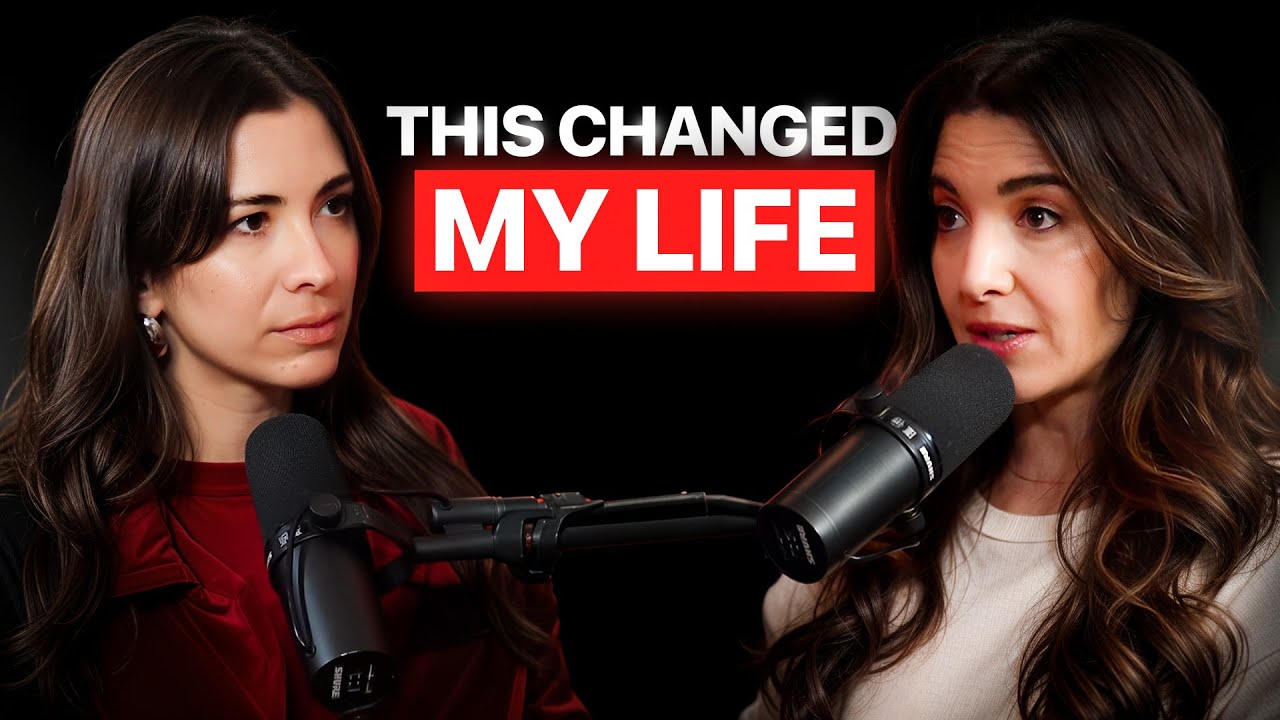
Marie Forleo is a world-renowned entrepreneur, author of the New York Times bestseller 'Everything is Figureoutable,' and creator of MarieTV and B-School, an online business training program with students in over 170 countries. She began her career on the floor of the New York Stock Exchange before leaving to build a global coaching and media brand. Forleo has been recognized by Oprah Winfrey as a thought leader for the next generation and is known for her philosophy of combining business strategy with personal alignment.
Marina Mogilko: You're tens of thousands of dollars in debt and this thing sounds so stupid and cheesy you're embarrassed to even say it out loud. If you're in your career for 10, 15 years, magical things start to happen. I want to just burn it all down. You are either going to endure something or you're going to enjoy it, right? Who do you think you are? And I sat on the church steps and I cried so hard because I hated my job so much and I felt like I was going to bring shame on my family if I quit. How do you keep this focus? How do you know you're doing the right thing and not start switching? Is there revenue tied to it? Is there profit tied to it? Or are you operating from fear? Marie, welcome to Silicon Valley Girls. I want to start with a question that you actually wrote a post on LinkedIn about making 2025 the best year of your life and the principles. How has it been going with the principles? How has 2025 been?
Marie Forleo: I mean, so far it is such a year of transformation for me and this year has been going amazing because it feels like I'm entering this new phase of a lot more ease, a lot more play. I've always been a really playful person, and just kind of unexpected ways that I'm showing up for me that feel really good. So far, so good.
Marina Mogilko: Can you share some of the principles that are working for you right now?
Marie Forleo: So I think in terms of a principle, it's like really honoring what my nervous system is a big yes to versus what is a big no. I kind of built my career and it was amazing from being in this place of saying, you know, I have this goal. I'm going to set this goal and I'm going to do whatever it takes to achieve it. That's amazing. That's beautiful. But after having followed that for so long, I started reaching a point where I was like, doesn't feel good anymore. The very things that have brought me joy, like sitting at my computer all day long or operating a particular way, I was like, it feels draining and almost like hitting a point of burnout.
Now, a principle of really tuning in and slowing down a little bit and asking myself, does this idea, whether it's for a product or a service or an offering or hiring someone or even in my personal life, how does this make my nervous system feel? If I start feeling a sense of either dread or tightening or like, "Ugh, this sounds awful," I'm just such a no. And it feels like in many ways for me my ego is taking a backseat. Ego is great, you know. Ego can be a real service to getting us to do things in the world and take a stand for ourselves and believe in ourselves to create something. But I think you might reach a certain point where it feels like it's driving you rather than your true self driving the car.
Marina Mogilko: Do you think this principle can be applied to someone who's just starting out their career? Because when you were starting, you were like, "Yeah, absolutely."
Marie Forleo: I think that's a really wise question and I don't know the answer. I think that you have to almost trust what that driving force is inside of you. When I first started my business, honestly, I was rooted in a lot of excitement and passion for making a difference to other people, and quite honestly, there was a lot of fear and failure underneath it. I had started my career on Wall Street on the New York Stock Exchange and I was super excited to find some way to make a really good living and to make a difference to other people, but I just kept failing at that. I was not good at working for others.
I remember being on the floor of the exchange and I felt so blessed to be there. I don't come from a lot of money. I was the first in my family to go to college. So I was grateful to have a steady paycheck and to be able to show up at this iconic center of finance and business in the whole world. But I remember showing up every single day and this little voice inside of me, Marina, kept saying, "Marie, this isn't who you are. This isn't what you're supposed to do. This isn't who you're supposed to be." And I was like, "Shh, I don't want to hear it. I need this paycheck. I need the health benefits. I don't have a plan B." But I kept ignoring that voice until one day I remember showing up on the floor and I said to my boss, who was a trader, "Hey, you know, I'm going to go out and grab some coffee. Is that cool?" And he was like, "Absolutely." And I didn't leave to grab coffee. I actually made a beeline towards the nearest church, which was Trinity Church.
I was raised Catholic. I just gone to a Catholic university, so I was kind of trained to look up when you're having a hard time. I sat on the church steps and I cried so hard because I hated my job so much and I felt like I was going to bring shame on my family if I quit because again, what the hell am I going to do? Go back to bartending and waiting tables. So I did the one thing that I was told to do at that moment, which was call your father. I took out my flip phone, which tells you that it is 1998. And so I'm doing the ugly cry with my dad on the phone, and I was like, "I'm so sorry. Like, you and mom work so hard to put me through college and I just want to quit and I'm trying so hard. I don't know what to do."
And like in between all my ugly cries, my dad interrupted me. He's like, "Re, you've been working since you were 9 years old. You've been babysitting. I'm not worried about you keeping a roof over your head, but here's the secret to life. You have to find something that you love to do because you're going to be working for the next 40, 50 years. And once you find something you love, it's not going to feel this way. I don't know how to tell you how, but if you need to leave this job because it's making you this sick that you're running out and crying on the church steps in the middle of the workday, you got to go."
And so that was my permission slip. But all I knew at that point in time was that I felt like I had some kind of gifts to make a difference in the world. And I wanted to create financial freedom for myself. And I didn't know how to do either one of those things. So I really went through my mind and it was like, okay, I'm highly creative. I thought I was going to be an animator for Disney or a fashion designer, but my dad was also a small business owner, so I loved small business. Those are the only two things I knew. And I was like, what's the combination of creativity and business? I thought, women's magazines. So I got a job at Condé Nast Publishing. It was an assistant job at Gourmet Magazine, right? I'm Italian-American. I love to eat. It was in the ad sales department and I was right next to the test kitchen. So all these editors would bring me snacks all day. I was like, "Oh my goodness, this is amazing."
Not to mention at that time, when I was on Wall Street, it was like 99.9% men. That was fine, but it was a very unbalanced, unintegrated environment. I was constantly like being hit on and I couldn't be taken seriously. I'm like, "This sucks." So at the magazine, my boss was this powerful woman. My publisher was this powerful woman. I was like, "Oh my god, this feels like a much more supportive, integrated, dynamic environment. This is going to be great." But like six months into that job, Marina, those voices came back again. I was like, "Marie, this isn't who you are. This isn't what you're supposed to do. This isn't what you're meant to be." And I was just like, what is going on?
Marina Mogilko: Can I pause you here for a sec? Because I get these voices even when I'm doing my most favorite thing in the world.
Marie Forleo: Yes.
Marina Mogilko: And I realize sometimes, or like often times, you love 80% of it, but there are like 20 to 30% that you don't like and you just have to get through. Is that where you still think, or do you think it's going to be 100%?
Marie Forleo: No. No, no, no, no. I think in every area of life, every area of business, there are going to be portions that are not your favorite. It's about proportion and it's about honestly listening. For example, parts of that job being an ad assistant, like helping my boss put together presentations and learning about sales elements—there were certain pieces of it that were really fun. But for me, I would say at least 80 to 90% of it, I'm like, "This sucks." I don't want to climb this corporate ladder. I didn't aspire to be the publisher of a magazine. So it really helped me get honest with myself that like this still wasn't it. You look at the end goal. Do I like it or do I—
Marina Mogilko: Exactly. And honestly, it feels like a lot of people these days, because you can change jobs so quickly, make this mistake of like, "I don't like what I'm doing, so I have to change my niche completely and go from being a financial expert to a creator in fashion, for example." Try to go from like basket weaving to AI or who knows. When do you think it's the right decision and when do you think people should think about just tweaking the processes, like maybe delegating something, getting rid of something, but staying in their niche?
Marie Forleo: Yeah, absolutely. If we're looking at this through a business context and you are running your own business, right? I think it's really important to identify what your genius zone is. We all know the 80/20 rule, where 80% of our results come from 20% of our inputs. The inverse, which I think is often more interesting and overlooked, is also true. So 80% of our stress comes from 20% of our inputs. If you analyze objectively in your business, whatever you've chosen, and you start to really get honest between you and you of where are the big drains on your psychic energy, your emotional energy, where you're just like, "Oh my god, I cannot do this," you'll know where those things are.
If you're in the beginning stages and you cannot afford to delegate it, well, now we have AI and there's a lot of new tools that have never been available before. Or if you need to hire, delegate it out, find a partner—there are many different ways to get those things off your plate. I think that realistically, when I started my business, I was a solo person for probably like five or six years. That was my choice. I wore all the hats and I was not good at all of them. But once you start getting traction and you start getting revenue in the door and a little bit of profit, if you want to get to that next level, you do have to continue to peel away the things that drain you, because your genius zone is where you're going to not only find the most joy and energy, but it's probably going to create the most value in the marketplace. And it's going to give you something that for me has been very, very important, which is longevity and sustainability.
Marina Mogilko: This is what I noticed. Because if you're in your career for 10, 15 years, magical things start to happen. If you're a good person, if you're hardworking, if you appreciate your art, and I see it in the US and it's such a game changer for me and for a lot of immigrants because they're struggling the first years. But then guys, just give it 10 years. That's what happens if you actually really, really, really genuinely love the thing that you're doing and you can carve through that 60, 70, 80% of joy and then maybe there's the 20% that feels a little bit laborious or tedious.
There's a tool that I like to share called "bring the party." This is something that I learned from my folks who are amazing. When we were young, my dad would have these clients who wanted a rush job and it was all in printing. Back in the day, we're talking like the 80s now. Rather than being away from my dad for the weekend because he had to go handle all this work for the clients, what my parents chose to do was bring my brother and myself to the shop. They would bring a boom box, they would get pizzas, and we would literally help my dad complete a rush job, but we would turn it into a party. He would give us little jobs that were legit jobs—it wasn't just busy work. We felt very engaged in the process.
Now, would we want to be working over the weekend? Not necessarily. But this tool of bringing the party is like, you are either going to endure something or you're going to enjoy it, right? If you endure something that you have to do—like your taxes, like writing a pitch, any aspect of your business that absolutely must get done—and at this stage you don't have anyone else or you don't have an AI agent or any support to do it, what are you going to do? You gonna cry in your cereal and drain all your energy and then not have anything else to give to your relationships or your health? Or you can bring the party and enjoy it.
Marina Mogilko: How do you bring party to taxes?
Marie Forleo: So you can bring the party to taxes. If you have any great music that you want, right, you can play your best tunes and you're like, "All right, I'm going to play my best tunes and I'm going to give myself 10 minutes to just start my taxes." Like I may not have to finish them, but I'm going to have a little party while I do it. One of the ways around procrastination, especially for some type of task where you're just like, "Oh my goodness, I want to do anything else," is you can bribe your friends to come over and do it with you. There are so many creative ways to bring a party to a task, but it's a really wise mental trick to not drain your energy, to get things done, and to really on a more spiritual and soulful level say like, "This is my whole life. If you have to do it, why not enjoy it?"
Marina Mogilko: Can you walk me through the process of determining which task is worth bringing a party to and which task is worth just dropping and saying goodbye to completely?
Marie Forleo: Oh, absolutely. I think that's going to be so specific to each person, but I do believe that as entrepreneurs, one of the things we have to watch out for is we start a particular process or we do something every single week, and then especially as you're building a team, everyone gets used to doing the same thing the way you've always done it. Whether it's once a quarter, once every six months, or at least once a year, you need to step back and ask yourself and your team, do we need to keep doing this thing? Just because we did it before and we've always had to do it, is it really still necessary to continue? I think that's really important for content creators like you and I. You know what I mean? You're like, "Maybe it's not bringing me joy. Should I continue?" Or just because everyone else says you should do it.
I'll give you a prime example for me. I remember when 2019 hit, right when my book was about to come out. One of my colleagues was like, "Marie, you got to get on TikTok." And it was like super early days. And I just checked in. I was like, "Nope, not for me." I knew it wasn't for me. And everyone was screaming at me, "You're missing out. You're missing out." Even now they're like, "But aren't you?" And I'm like, "No." I think it takes a lot of wisdom and self-trust. I know we're going a little off the original question, but for most entrepreneurs, if you try to be everywhere and do everything all at once, especially in the beginning, you're going to wind up burning out and quitting before you hit that magical 7, 10, 12 year mark where everything starts to come together.
I'm a big fan and advocate of making business success sustainable because we're living in a time where there's more information, more input, more data, more shiny objects, more everything than ever before. And I believe our brains and our bodies and our nervous systems are not quite equipped to handle this. So you have to have wisdom when you go about your journey. Going back to your original question about how we discern what to bring the party to or what to drop or delegate out, I think you need to ask yourself first of all: Is this a critical business function? Is there revenue tied to it? Is there profit tied to it? Is there any kind of data that proves that you should absolutely keep this going? Or are you operating from fear? Is this fear-rooted? Like, if I stop showing up in a particular place, if I stop offering this particular revenue stream, if I stop doing this, am I going to lose relevance? Am I going to lose money? You're kind of operating from fear.
Marina Mogilko: Always both, right? For entrepreneurs.
Marie Forleo: Yeah. For some people there's joy there. But for me there wasn't. Does that make sense?
Marina Mogilko: Joy would be the absolute criteria for me. I cannot make myself do something I genuinely don't want to do for very long. When were you able to mentally allow yourself to do that? Did it come with a certain number in the bank?
Marie Forleo: No. So, going back to remember Gourmet Magazine and I was telling the story and I kept hearing that voice like "this isn't you, this isn't what you're supposed to be." So I actually went to the HR department. I was like, "Look, I don't think I'm meant to be on the ad sales side. I thought that my creativity was still being underdeveloped and I was undernourished. So I'd love to be on the editorial side of the magazine. If any job position opens up, please let me know, even if it's a pay cut." Something did open up at Mademoiselle Magazine. I was like, "This is gonna be it." I'm working with fashion designers, photography, photoshoots—so glamorous, so fun. I got that position. And it was fabulous and novel for like 6 months. And then those voices came back again.
And I was like, Marina, at this point, I felt like I was broken. It kept repeating. It keeps repeating. Maybe I have some cognitive deficit. I can't focus. Turns out I am ADHD. I didn't know that at that time. But around then I stumbled upon an article online about a new profession at the time called coaching. Now, setting context, this is probably 1999, 2000, and it was all about this world of life coaching, which I will admit as a Jersey girl sounded really cheesy and stupid. But there was something in my heart that lit up like a Christmas tree, like nothing else before.
So I had one voice in my head say, "Who do you think you are? No one's gonna hire a 23-year-old life coach. You haven't even lived life yet. You don't have what it takes to do this." Yet, I couldn't deny that my body was so on fire and so tingly. It was like the clouds parted and little angels were like, "This is what you're supposed to do."
So cut to, I signed up for a three-year life coach training program that happened at night while I worked at Mademoiselle during the day. And then about six months later, I got a call from the HR department at Condé Nast. They had a promotion for me at Vogue. That was my fork in the road. You're either going to go to Vogue—more money, more prestige, all the wonderful things, all the doors open, and people understand what you do—or you're going to quit and start your own life coaching business at 23, which you have no idea how to start. You're tens of thousands of dollars in debt. And this thing sounds so stupid and cheesy that you're embarrassed to even say it out loud.
Of course, I chose that one because it felt right, even though it did not make logical sense. I had failed.
Marina Forleo: You could have done Vogue, got to meet all these people, and then started a coaching business with all the access that you had.
Marie Forleo: Yes. But I didn't choose that. I chose the path of like, "I cannot work for someone else. I am not built to sit at a desk all day. I cannot do this any longer and keep failing. I will figure out come hell or high water how to build this weird-ass life coaching business that no one's ever heard of, that I am totally afraid of."
So your question before was around, well, how does this, how do we develop this ability or when did you start developing this ability to listen to joy and have that be kind of the barometer? How do you even hear yourself?
Marina Mogilko: Well, I think you were talking about that you have these voices inside too.
Marie Forleo: Yes, I have them all the time.
Marina Mogilko: And sometimes the next day I wake up and I'm like, "What was that voice yesterday? It was weird. I'm glad I didn't listen to it."
Marie Forleo: Yes. So this is you actually bringing up a perfect point. One of the things that I've noticed over time is if that voice is consistent and keeps repeating—not just over a day, not just over a week, but probably like a few months, and for some of us it could be a year—you can trust that voice. But all of us of course have good days and bad days where we're like, "I want to just burn it all down."
Marina Mogilko: Exactly. And we're not going to make emotional decisions and burn it all down, you know, in that context.
Marie Forleo: Yeah. There's truth in that.
Marina Mogilko: I feel like for a lot of women, every month you have like 100%.
Marie Forleo: Goodbye everyone. First of all, that's real. Like one of the most real things is the chemicals of hormones and how they impact every part of our experience of living, our decision-making, how we want to burn it all down if we're crying our eyes out in the corner. And then the next day you wake up and you're like, "Dude, I'm fine. Completely fine." So it's wisdom to not act on that.
Marina Mogilko: Is there anything that you do every single day or like every week to kind of develop this ear for your body? Is it meditation or maybe you work only particular hours?
Marie Forleo: Yeah, you know, that has evolved over the years, and I always like to pay attention to what I call my "primary project." The use of time, productivity, getting things done—that's always been a huge obsession of mine. And in the past five or six years, I've really honed in on some skills and some practices that are rooted in mind science and also just common sense that help me function at my best, especially as someone who has a very wild brain, an ADHD brain, which I don't think is a limitation at all. I've actually been told it's quite a gift, and many entrepreneurs have it.
So if my primary project, for example, was when I was writing "Everything is Figureoutable" and I was about to go on book tour, it actually involved my book launch, which was my vision. It was a combination of what if a TED Talk, a Beyoncé concert, and a block party had a baby. That's what I wanted to do. So I wanted to talk on stage. I wanted to dance on stage. I wanted it to be a full concert. And it was amazing. We sold out the Hammerstein Ballroom. It was so much fun. But I had not been dancing in that regard or performing since I was a Nike athlete back in the day. So I was like, "Okay, I need to train again." So in those times, in the morning, I'm not going to do a super lengthy morning process of meditation and journaling and all that stuff. I needed to get my ass in the studio and rehearse and perform for like a couple of months because that was my primary project.
In other times, like when I was working on writing the book, the most important thing for me to do in the morning was to meditate and write. So it always is contextual and it's tied to whatever my primary project is in that stage and season of my life. Generally speaking, I find that movement—and for me specifically, dance and weight training are two of the things, and I would throw yoga in there as well—these are things that help my channel stay open. For as strange as that might sound, I think that for many of us, we spend so much time looking at our screens and so much time sitting and so much time consuming information and podcasts and shows that we're often out of touch with our physical body. That movement practice, whatever it may be, for me clears my mental cache and has me much more receptive to what I like to call downloads—those intuitive downloads, those ideas, those breakthroughs that don't come from grind.
Marina Mogilko: Let's talk about financial stability. You shared your background, coming from a family—your family was from Italy, right?
Marie Forleo: Not my parents, but my parents' parents.
Marina Mogilko: Your parents' parents. You have this immigrant mindset. I grew up in Russia. We had one room that was shared with my parents. They could only afford one apple a week. It was like that for seven years of my life. And then it was still kind of rough. We weren't really well off. So when I started making money, until this day, it's really hard for me to say no to brand deals just because I'm still that Marina who's in Russia whose parents can't afford food. Like, who am I to say no to this?
Marie Forleo: Yes.
Marina Mogilko: And it seems like a never-ending game. So this fear of going back to that room never went away. I wonder if it ever went away for you or if you're still—
Marie Forleo: It's such a great question. And it's a really important one because it speaks to something universal that I think all of us find it useful to face. It's like, what is enough and when do you stop? To answer very specifically, there was a point in my career when I remember talking to my financial advisors and they sat me down and we did all of the different scenarios that you can run. There's like one—it's called "retire tomorrow"—and it's just a set of algorithms that they can run based on your investments and your spend and all those wonderful things. And they told me, "Marie, you'll never have to work again." And Marina, I didn't believe it. I understood I could receive that information, but on a cellular level, I didn't trust it. I didn't trust it.
Marina Mogilko: Because the financial system can crush. That's my thing. You can tell me whatever you want.
Marie Forleo: Absolutely. And so simultaneously, I also know myself. I'm actually not a big spender. It has taken me personally a few years—like four to five years—to really thaw to the fact that I don't have to work anymore. So it has been, and it continues to be, a journey, like a spiritual journey, of really tuning in and understanding from a very reasonable, logical place. Yes, of course the market could tank. Everything could go away. And then I also have to face the reality: if that were to happen, all bets are off. Then we're in like a Hunger Games situation and it doesn't matter what I had in the bank.
Marina Mogilko: Does that make sense? Yeah. But still I'm like, but there will be crypto, there will be cash. I have enough of that. Like real estate around the world. Like this feeling of safety. For me there is no level that's enough for that feeling to go away. It's like, sorry—feeling of unsafety. Like, I feel unsafe all the time.
Marie Forleo: Well, I think that's, and maybe—and this is just an invitation. This is something to consider for you to try on. It might not have to always be that way. It might not have to. Like, if you're interested in exploring or going, "Huh, I am willing to have that feeling of not being safe melt away and get replaced by something from the inside where my sense of peace and security comes from within." And trust me, I'm not just spitting out inspiration for you. Actually, it has, because I think one of the things that is really fascinating and kind of useful about coming from nothing or existing in a period where you've got tens of thousands of dollars of debt is you know what that feels like. And then if you were able to climb out of something like that before, well, that means that you have what it takes to figure it out again.
Marina Mogilko: Yeah, but you're 20 and—
Marie Forleo: That's all right. That's all right. I think there's truth in that. And yeah, you have different energy levels at different points of life, but what you have when you're older is wisdom and experience and connections, which I didn't have way back then. So I also think what's useful too, what's cool about just going through different decades, is we have this assumption sometimes that who you are is who you are, you know, and I'm always going to want these kinds of things and I'm going to want this kind of life and these are my priorities and I'm always going to want the biggest or the best or you know, you kind of have this notion of who you are and maybe it's fixed and you're like, "I'm always going to be this way." And what life has taught me is that's not true.
But coming back to you, I'm just going to say that my hope for you, person to person, soul to soul, woman to woman: I know for a fact that you can feel that sense of safety and security from within. That doesn't mean financial situations won't go up and down, but I think it's going to be such a gift that you'll be able to give to yourself. And I know it's possible if it's something that you want.
Marina Mogilko: Yeah. I think it's also something that keeps us going, right? Especially immigrants.
Marie Forleo: Yes.
Marina Mogilko: And you're like, "But should I drop this feeling if it's the—"
Marie Forleo: Oh, that's actually—let you or can we peel into that a little bit?
Marina Mogilko: Yeah. Yeah. Let's do it.
Marie Forleo: Because that's super fun. There is an idea and a notion that I think many of us have been taught, and I've certainly been taught it, that if you don't have hunger, that if you don't keep that hunger alive, that somehow you're going to lose your edge, that somehow you're going to fall behind, that somehow you're gonna slip out of relevance. And every single one of those thoughts, at least for me, is rooted in fear. It's rooted in fear of losing something. It's rooted in fear of again becoming irrelevant or missing out or falling behind or other people getting ahead or me losing everything I work so hard for. And the more I've been pushing against that dogma and testing it, it's not true.
It's like creation can happen at so many different levels. And for me, what my experience has been is the desire to create comes less from a desire to prove or keep or retain or clench or hold on to, and it's coming from a much deeper, more expansive and playful and easeful place, which is not something that I'm used to. Just to be clear, I'm used to pushing. I'm used to grinding. I'm used to like, "Get out of my way and I will make it happen." That's useful. That's awesome. But it's almost like, you know how a piano has 88 keys? I've been playing on 44 for the first part of my career, which is that push, that grind. Again, it's useful skills. That's what gets you there. But what if there's a whole other range to play in? And so that's what I'm interested in exploring. I ain't losing that. That's a part of me that's never going to go away. But it's kind of like overtraining a muscle, you know what I mean? And it gets boring a little bit.
Marina Mogilko: That makes total sense. Yeah. So you have that range. So when you need to push, when you need to grind, when you need to have that hunger, it's like, "Oh, I can fire that up. That's well-known in me. But what about this whole other side?"
Marie Forleo: Love it. So what's the metric you optimize for these days? The metric I optimize for is honestly, like, from a business perspective, I'm like, is it easeful, joyful money? Like, can I show up and create a product, a service, or an offering where it's like in that 80 to 90% genius zone for me? And there is no nervous system dread. If there's something like, "Oh, all your customers and your audience want it and they want it so bad and everybody wants it," I'm like, "Dude, if I don't want it, it is a psychic, emotional, energetic drain. And at some point, it's going to be a detriment to the bottom line. It's going to be a detriment to my ability to serve and my team. Like everything's going to go down at some point if I don't obey my inner truth."
So from a money standpoint, you know, and of course there's a difference between the business side and the personal side. I think one of the joys of hitting the stage that I'm at is like I don't have to work for the money. So now I want to reshape things where it's like, "Oh, I'm working because things are really exciting because I can bring something to the market or I can create something that's going to make my customers' lives so much easier, but I'm going to do it in a very artful and playful way."
Marina Mogilko: Do you see more progress there? Do I see? Oh, like, does it grow faster than when it's coming from the fear or like the hustle?